Ancient World
Reed Boat
Reed Boat
One of the earliest known boat forms, built from bundled reeds and used on rivers and sheltered waters in Mesopotamia, Egypt, and Lake Titicaca traditions.
shipsofhistory.site now moves from the ancient world to modern fleets with fuller era pages, deeper vessel writeups, and a new famous captains section. The layout stays the same, but the site feels much more complete, with more ships, more context, and stronger historical explanation instead of short placeholder text.
The site is arranged by era first, then by vessel type, then by dedicated detail pages. A matching captains section now follows the same style and structure.
Start with a time period, then open the boats and ship classes connected to that era.
Ancient maritime craft were shaped by rivers, coastlines, and enclosed seas. Builders worked with reeds, planked wood, rope lashings, and simple ...
Classical fleets tied together the Mediterranean world. Greek city-states, Hellenistic kingdoms, Carthage, and Rome all depended on war galleys, ...
Viking shipbuilding emphasized clinker-planked hulls, shallow draft, and light weight. Excavated ships such as Oseberg, Gokstad, and Skuldelev pr...
Medieval shipping linked ports of the North Sea, Baltic, Mediterranean, and Atlantic coasts. As trade networks expanded, hulls grew deeper and ca...
The Age of Sail was defined by wind-powered vessels built for trade, warfare, fishing, exploration, and transport. Maritime empires relied on shi...
Steam power changed seafaring by reducing dependence on wind and creating regular routes with predictable timing. Paddle propulsion came first, t...
Iron and steel transformed shipbuilding in the nineteenth century. Armor plate, heavy shell-firing guns, rotating turrets, and more powerful engi...
Modern ships reflect specialization and global scale. Military, commercial, scientific, and passenger vessels are now designed around exact missi...
Jump into the major eras below, open the captain section to follow the people behind major voyages, or use Compare & Battle to test ship strengths against each other.
Reed Boat, Egyptian River Boat, Abydos Boat, Merchant Galley, and more.
Bireme, Trireme, Quinquereme, Liburnian, and more.
Longship, Karve, Knarr, Busse, and more.
Cog, Hulk, Byrding, Mediterranean Galley, and more.
Caravel, Carrack, Shallop, Galleon, and more.
Paddle Steamer, Screw Steamer, Clipper-Steamer Hybrid, Ocean Liner, and more.
Ironclad, Protected Cruiser, Cruiser, Pre-Dreadnought Battleship, and more.
Destroyer, Aircraft Carrier, Submarine, Container Ship, and more.
Zheng He, Nelson, Cook, Grace O'Malley, Blackbeard, Drake, Columbus, and Magellan.
Ancient maritime craft were shaped by rivers, coastlines, and enclosed seas. Builders worked with reeds, planked wood, rope lashings, and simple sail rigs, while many states depended on boats for grain movement, river travel, tribute collection, and war. Archaeology from Egypt, Mesopotamia, the eastern Mediterranean, and the Indian Ocean shows that early boat design changed slowly but laid the foundation for nearly every later seafaring tradition.
One of the earliest known boat forms, built from bundled reeds and used on rivers and sheltered waters in Mesopotamia, Egypt, and Lake Titicaca traditions.
A wooden Nile craft used to move stone, grain, troops, and officials, with evidence preserved in tomb models and wall paintings.
Large early Egyptian funerary and ceremonial boats connected with royal ideology and some of the oldest substantial boat remains ever found.
An early trade vessel that combined sail and oars so merchants could keep moving even when winds were weak.
A fast early Mediterranean war craft with about fifty oars, often seen as a predecessor to more specialized galleys.
A highly organized oared warship with three levels of rowers, famous in Greek naval warfare and especially in the Persian Wars.
Egyptian river boats were built for the Nile, a waterway that acted as Egypt's great internal highway. Tomb art, models, and inscriptions show these vessels carrying grain, stone, livestock, officials, and ceremonial processions. Because Nile traffic moved with the river's current one way and prevailing winds the other, Egyptian boat design developed around a remarkably efficient environmental system.
The Abydos boats are among the most remarkable pieces of early Egyptian nautical evidence. Buried near royal funerary monuments, these large wooden boats suggest that elite power, ritual symbolism, and practical boatbuilding knowledge were already highly developed in the early dynastic period.
Classical fleets tied together the Mediterranean world. Greek city-states, Hellenistic kingdoms, Carthage, and Rome all depended on war galleys, transports, and grain carriers. Written evidence from Herodotus, Thucydides, Polybius, and later Roman authors, along with wrecks and harbor archaeology, shows how naval power supported empire, taxation, and long-distance trade.
An early war galley with two banks of oars that gave more power than single-level rowing craft.
The most famous classical galley, optimized for speed, ramming, and disciplined crew coordination.
A larger warship used especially by Carthage and Rome, built for heavier fighting and marine complements.
A lighter and faster Roman vessel adopted for scouting, escort, and anti-piracy work.
A broad-bellied Roman merchant ship designed for bulk cargo, including grain, amphorae, and trade goods.
A military support vessel used to move troops, horses, food, and equipment across imperial waters.
The bireme was an important predecessor to the trireme, using two levels of rowers to produce more power than a single-banked galley. It appeared in several Mediterranean traditions and helped set the pattern for increasingly specialized war galleys in the first millennium BCE.
The liburnian was a lighter, faster warship adopted and adapted by the Romans after contact with Adriatic seafaring traditions. It became useful in scouting, escort, pursuit, and lighter fleet work where speed and responsiveness mattered more than sheer mass.
Viking shipbuilding emphasized clinker-planked hulls, shallow draft, and light weight. Excavated ships such as Oseberg, Gokstad, and Skuldelev provide direct physical evidence for how Scandinavian builders created vessels that could cross the North Atlantic, move up rivers, beach quickly, and still handle difficult seas.
The iconic Viking war vessel, long and narrow, built for speed, raiding, and rapid coastal movement.
A smaller Scandinavian boat used for local transport, fishing, and short coastal journeys.
A broader cargo ship built for trade, livestock, colonization, and Atlantic crossings.
A large prestige or war-related vessel, mentioned in saga and legal material as a more substantial craft.
A small open boat with two pairs of oars, useful for daily work and short water crossings.
The karve was a smaller Norse vessel used for local movement, transport, and practical seafaring. It did not carry the same legendary aura as the largest longships, but smaller clinker-built boats like it were essential to daily life in Scandinavian maritime society.
The term busse is often associated with larger Scandinavian vessels, possibly including high-status or war-capable ships. Though not as famous in popular memory as the longship, it points to the fact that Viking maritime power included a scale of vessel sizes suited to different political and military needs.
Medieval shipping linked ports of the North Sea, Baltic, Mediterranean, and Atlantic coasts. As trade networks expanded, hulls grew deeper and cargo capacity became more important. Documentary evidence from port records, seals, and merchant law codes lines up with shipwreck evidence to show a steady move toward larger, more specialized sailing craft.
A high-sided single-masted vessel central to North Sea and Hanseatic trade.
A cargo ship type associated with broad hulls and substantial carrying ability.
A Scandinavian trading vessel used in the transition between Viking and later medieval ship traditions.
A continued oared and sailed vessel used in war, trade, and state logistics.
A broad medieval sailing vessel built more for cargo and endurance than for ramming warfare.
The medieval hulk was a broad cargo vessel associated with northern European commerce. In many cases it represented a larger, deeper-bodied trading solution than earlier coastal craft, making it suitable for growing economic exchange across the North Sea world.
The medieval Mediterranean galley continued the ancient oared-warship tradition but adapted it to new political and commercial conditions. Italian city-states, crusading powers, and regional rulers used galleys for war, convoy escort, raiding, and fast passenger or high-value cargo movement.
The Age of Sail was defined by wind-powered vessels built for trade, warfare, fishing, exploration, and transport. Maritime empires relied on ships that could cross oceans, carry artillery, enforce trade monopolies, and project state power. Surviving plans, naval records, and famous wrecks show how hull form and rigging changed as oceanic sailing became central to world history.
Small, maneuverable, and strongly associated with Iberian exploration.
A larger predecessor to later deep-ocean sailing fleets, built for cargo and long voyages.
A practical small working boat that could be rowed or sailed.
A long, armed, ocean-going ship used for trade, treasure movement, and warfare.
A heavily built merchant ship designed for profitable long-distance trade between Europe and Asia.
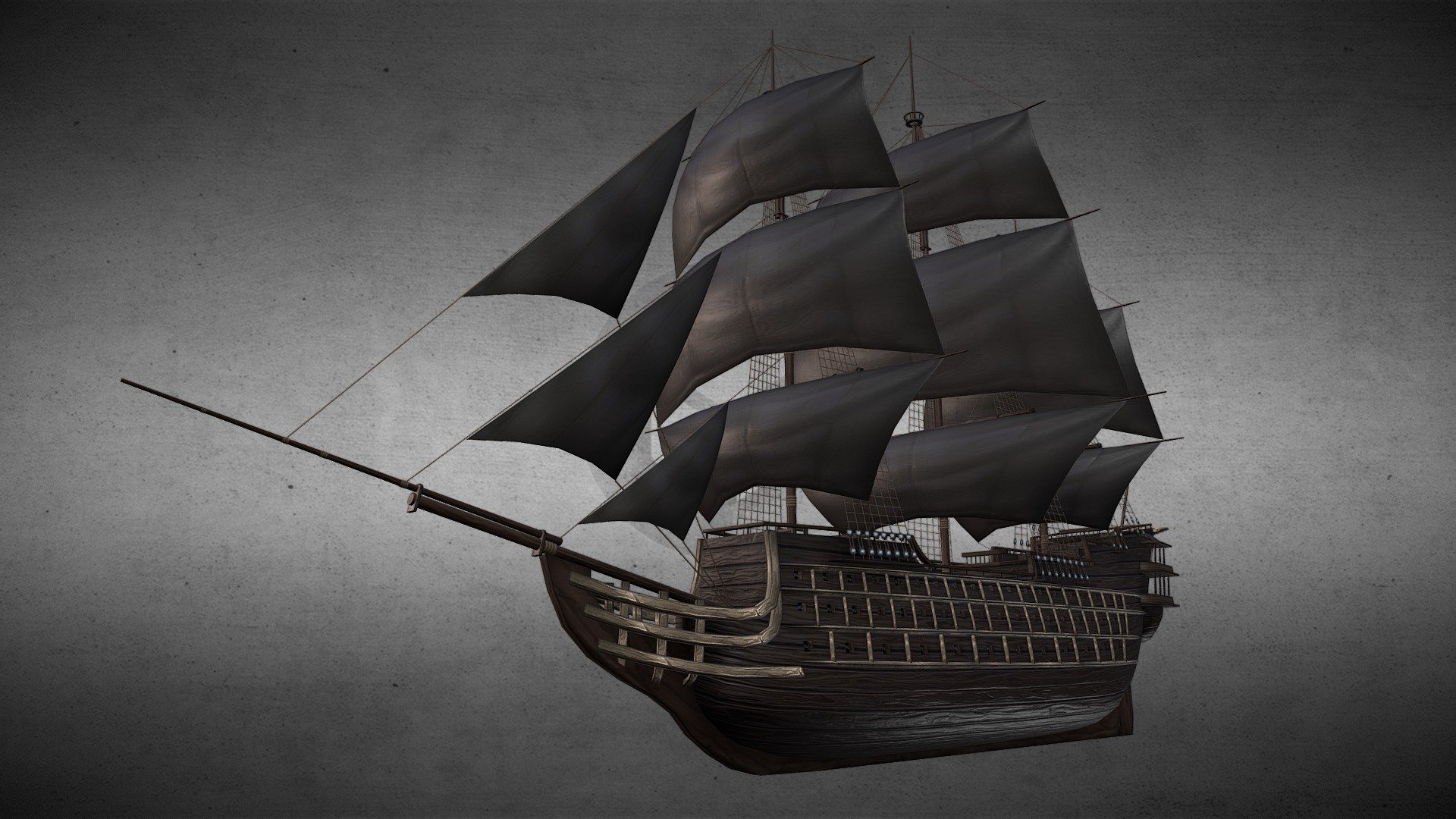
A powerful state warship built for line-of-battle action and heavy gun decks.
A multi-masted vessel with a mixed sail plan suited to long ocean routes.
A two-masted working vessel common in fisheries and coastal service.
A handy two-masted ship linked to trade, privateering, and patrol work.
A fast warship built for escort, scouting, raiding, and independent command.
A smaller, useful vessel seen in trade, patrol, dispatch, and irregular warfare.
A fast fore-and-aft rigged vessel common in coastal trade and fishing.
A scheduled carrier for mail, passengers, and freight.
A later fast sailing merchant ship built to win time-sensitive trade routes.
The corvette was a relatively small and fast warship used for dispatch, patrol, escort, and colonial presence. It filled the gap below the frigate, giving navies a cheaper vessel for distant stations and practical daily service.
Steam power changed seafaring by reducing dependence on wind and creating regular routes with predictable timing. Paddle propulsion came first, then screw propellers became dominant. Industrial shipyards, iron framing, and marine engines made ships larger, more reliable, and more specialized than before.
An early steam vessel propelled by paddle wheels, common on rivers, coasts, and early passenger services.
A propeller-driven steam ship that proved more efficient and seaworthy than many paddle designs.
A transitional vessel that mixed strong sail plans with auxiliary steam power.
A scheduled long-distance passenger and mail ship built for reliability and range.
A steam-powered combat vessel used for river operations, colonial warfare, and coastal pressure.
The screw steamer replaced many limitations of the paddle steamer by moving propulsion below the waterline and improving efficiency in open water. The adoption of the screw propeller was one of the most important steps in turning steam shipping into the dominant form of maritime transport and warfare.
Iron and steel transformed shipbuilding in the nineteenth century. Armor plate, heavy shell-firing guns, rotating turrets, and more powerful engines ended the age of wooden battle fleets. At the same time, merchant shipping grew in scale as industrial economies demanded regular bulk transport across oceans.
An armored warship that marked the break from wooden ships of the line.
A fast steel warship with armored deck protection for patrol, scouting, and imperial stations.
A flexible ocean-going warship designed for reconnaissance, escort, and independent operations.
A heavily armed battleship of the late nineteenth century before the all-big-gun revolution.
A major armored warship built around heavy guns, protection, and fleet action.
The battleship represented the concentration of industrial naval power into a single heavily armed and armored vessel. From pre-dreadnought forms through the dreadnought revolution, battleships symbolized national prestige, shipyard strength, and the ability to dominate fleet engagements.
Modern ships reflect specialization and global scale. Military, commercial, scientific, and passenger vessels are now designed around exact missions rather than broad multipurpose use. Containerization, diesel propulsion, nuclear power, radar, sonar, aviation support, and digital navigation have all reshaped what a ship can do.
A fast multi-role warship used for escort, air defense, missile warfare, and fleet screening.
A capital ship built to project air power far from shore.
A vessel able to operate underwater for stealth, strike, and surveillance missions.
A standardized cargo vessel that transformed world trade through containerization.
A large passenger vessel designed around leisure travel and floating hospitality.
A specialized ship used for oceanography, mapping, and scientific fieldwork.
The aircraft carrier shifted naval power from gun range to air range. Instead of relying mainly on direct surface fire, a carrier projects striking power through embarked aircraft, allowing fleets to attack far beyond the horizon and shape operations over sea and land.
The submarine introduced stealth as a major factor in naval warfare. By attacking from below the surface, submarines threatened merchant shipping, warships, and sea lines of communication in ways that forced every major navy to rethink escort, detection, and convoy strategy.
Egyptian river boats were built for the Nile, a waterway that acted as Egypt's great internal highway. Tomb art, models, and inscriptions show these vessels carrying grain, stone, livestock, officials, and ceremonial processions. Because Nile traffic moved with the river's current one way and prevailing winds the other, Egyptian boat design developed around a remarkably efficient environmental system.
Excellent river efficiency, shallow draft, and strong utility in transport and ceremony.
Limited open-sea ability and low value in heavy combat.
These boats mattered because pharaonic Egypt depended on moving heavy materials and food along the Nile. Monument building, tax collection, military logistics, and religious ceremo...
Best for internal trade, state transport, and Nile movement.
These boats mattered because pharaonic Egypt depended on moving heavy materials and food along the Nile. Monument building, tax collection, military logistics, and religious ceremony all relied on dependable river transport. In many ways, the river boat was part of the administrative skeleton of the Egyptian state.
Historical evidence for Egyptian craft is unusually strong. Archaeologists have found boat burials, preserved hulls, iconography in tomb scenes, and detailed models placed in funerary contexts. That evidence suggests specialized vessels existed for fishing, transport, ceremony, and elite travel, all tied to the central importance of the Nile.
Excellent river efficiency, shallow draft, and strong utility in transport and ceremony.
Limited open-sea ability and low value in heavy combat.
Best for internal trade, state transport, and Nile movement.
This vessel helps explain how maritime technology matched the needs of its era, from trade and exploration to warfare and state power.
The Abydos boats are among the most remarkable pieces of early Egyptian nautical evidence. Buried near royal funerary monuments, these large wooden boats suggest that elite power, ritual symbolism, and practical boatbuilding knowledge were already highly developed in the early dynastic period.
Shows advanced early construction and elite investment in maritime symbolism.
Likely specialized and not a general-purpose fighting vessel.
The significance of the Abydos boats is partly symbolic and partly technical. Symbolically, they show how closely kingship was linked to river and cosmic imagery. Technically, they...
Best understood as evidence for early shipbuilding and royal ritual.
The significance of the Abydos boats is partly symbolic and partly technical. Symbolically, they show how closely kingship was linked to river and cosmic imagery. Technically, they demonstrate that sophisticated timber boat construction existed very early, long before many people imagine large planked vessels becoming common.
Archaeological excavation at Abydos provided direct evidence rather than only artistic representation. The finds helped historians understand hull size, plank use, and ritual boat burial practices. For maritime history, that makes the Abydos material one of the foundational data sets for early shipbuilding in the ancient world.
Shows advanced early construction and elite investment in maritime symbolism.
Likely specialized and not a general-purpose fighting vessel.
Best understood as evidence for early shipbuilding and royal ritual.
This vessel helps explain how maritime technology matched the needs of its era, from trade and exploration to warfare and state power.
The bireme was an important predecessor to the trireme, using two levels of rowers to produce more power than a single-banked galley. It appeared in several Mediterranean traditions and helped set the pattern for increasingly specialized war galleys in the first millennium BCE.
More power than single-banked craft and useful early war capability.
Less advanced tactically than the trireme and still crew-intensive.
The bireme matters because naval warfare develops in steps, and the trireme did not appear from nowhere. By increasing oar power while preserving a narrow warlike hull, biremes hel...
Best for early fleet warfare and as a developmental step toward larger galleys.
The bireme matters because naval warfare develops in steps, and the trireme did not appear from nowhere. By increasing oar power while preserving a narrow warlike hull, biremes helped move Mediterranean states toward larger, more organized sea combat. They were part of the experimentation phase of galley warfare.
Direct evidence is more fragmentary than for some later ship types, but iconography, references in ancient sources, and comparative naval development strongly support the importance of double-banked rowing systems. The bireme therefore stands as a key transitional ship in the logic of ancient naval design.
More power than single-banked craft and useful early war capability.
Less advanced tactically than the trireme and still crew-intensive.
Best for early fleet warfare and as a developmental step toward larger galleys.
This vessel helps explain how maritime technology matched the needs of its era, from trade and exploration to warfare and state power.
The liburnian was a lighter, faster warship adopted and adapted by the Romans after contact with Adriatic seafaring traditions. It became useful in scouting, escort, pursuit, and lighter fleet work where speed and responsiveness mattered more than sheer mass.
Fast, useful for patrol and pursuit, and less cumbersome than heavy galleys.
Lower striking weight and marine capacity than larger battle craft.
Roman naval strength was never only about the heaviest ships. Lighter craft like the liburnian had real operational value in communication, anti-piracy patrol, and support for larg...
Best for scouting, escort, and anti-piracy roles.
Roman naval strength was never only about the heaviest ships. Lighter craft like the liburnian had real operational value in communication, anti-piracy patrol, and support for larger formations. They fit the needs of an empire that had to supervise a wide maritime space, not merely win one decisive battle.
Ancient references and later Roman usage suggest that the liburnian tradition became normalized in imperial naval service. Its history shows that mixed fleets were important even in antiquity, just as they would be in later sailing and steam navies.
Fast, useful for patrol and pursuit, and less cumbersome than heavy galleys.
Lower striking weight and marine capacity than larger battle craft.
Best for scouting, escort, and anti-piracy roles.
This vessel helps explain how maritime technology matched the needs of its era, from trade and exploration to warfare and state power.
The karve was a smaller Norse vessel used for local movement, transport, and practical seafaring. It did not carry the same legendary aura as the largest longships, but smaller clinker-built boats like it were essential to daily life in Scandinavian maritime society.
Practical, lightweight, and effective for local travel and utility work.
Limited cargo and combat capacity compared with larger Viking ships.
Maritime cultures depend on ordinary craft as much as on prestige ships. The karve would have handled coastal transport, local trade, fishing, and short-distance movement of people...
Best for coasts, fjords, fishing, and community transport.
Maritime cultures depend on ordinary craft as much as on prestige ships. The karve would have handled coastal transport, local trade, fishing, and short-distance movement of people and goods. In that sense it belonged to the fabric of Viking life rather than only its raiding edge.
Smaller Norse boats are less dramatically represented in popular culture, but archaeology and reconstruction work show a wide range of Scandinavian hull types. That variety is part of what made Viking maritime activity so effective: the culture possessed not one magic ship, but a family of related practical designs.
Practical, lightweight, and effective for local travel and utility work.
Limited cargo and combat capacity compared with larger Viking ships.
Best for coasts, fjords, fishing, and community transport.
This vessel helps explain how maritime technology matched the needs of its era, from trade and exploration to warfare and state power.
The term busse is often associated with larger Scandinavian vessels, possibly including high-status or war-capable ships. Though not as famous in popular memory as the longship, it points to the fact that Viking maritime power included a scale of vessel sizes suited to different political and military needs.
Greater capacity and prestige than smaller Norse boats.
Less lightly handled than small raiding craft and not as well documented archaeologically.
Larger Scandinavian ships mattered because expanding chieftaincies and kingdoms required more than raiding parties. Prestige, troop movement, and elite control often demanded large...
Best for elite transport, larger expeditions, and demonstrating status.
Larger Scandinavian ships mattered because expanding chieftaincies and kingdoms required more than raiding parties. Prestige, troop movement, and elite control often demanded larger hulls with more carrying power. The busse tradition helps historians think about Viking fleets as structured political assets rather than only loose pirate bands.
Sources are less complete than for some excavated ship finds, but terminology in medieval texts and comparative reconstruction support the idea of larger specialized Norse vessels beyond the standard image of a single iconic longship form.
Greater capacity and prestige than smaller Norse boats.
Less lightly handled than small raiding craft and not as well documented archaeologically.
Best for elite transport, larger expeditions, and demonstrating status.
This vessel helps explain how maritime technology matched the needs of its era, from trade and exploration to warfare and state power.
The medieval hulk was a broad cargo vessel associated with northern European commerce. In many cases it represented a larger, deeper-bodied trading solution than earlier coastal craft, making it suitable for growing economic exchange across the North Sea world.
Strong carrying role and useful bulk-trade profile.
Not especially fast and less suited to maneuver warfare.
As medieval commerce expanded, shipbuilders needed hulls that could move more goods more reliably. The hulk belongs to that broader commercial evolution. It reflects a world of fai...
Best for northern medieval commerce and staple cargoes.
As medieval commerce expanded, shipbuilders needed hulls that could move more goods more reliably. The hulk belongs to that broader commercial evolution. It reflects a world of fairs, port towns, tolls, and merchant partnerships rather than heroic exploration narratives.
Evidence for hulks appears in documents, seals, art, and archaeological comparisons. Although the exact form could vary across time and region, the type stands for the commercial enlargement of medieval maritime exchange, especially before later early modern sailing forms took over many routes.
Strong carrying role and useful bulk-trade profile.
Not especially fast and less suited to maneuver warfare.
Best for northern medieval commerce and staple cargoes.
This vessel helps explain how maritime technology matched the needs of its era, from trade and exploration to warfare and state power.
The medieval Mediterranean galley continued the ancient oared-warship tradition but adapted it to new political and commercial conditions. Italian city-states, crusading powers, and regional rulers used galleys for war, convoy escort, raiding, and fast passenger or high-value cargo movement.
Fast tactical control in enclosed seas and strong utility in convoy or warfare.
Crew-heavy, provisioning-intensive, and weaker for open-ocean endurance.
Mediterranean geography favored galleys for centuries because enclosed seas, island chains, and coast-hugging routes rewarded speed, direct control, and beach or harbor access. Unl...
Best for Mediterranean warfare, escort, and rapid movement.
Mediterranean geography favored galleys for centuries because enclosed seas, island chains, and coast-hugging routes rewarded speed, direct control, and beach or harbor access. Unlike deep-ocean sailing ships, galleys could move tactically in calm conditions and fight on human power when wind failed.
The type remained relevant well into the late medieval and early modern periods, proving that technological progress is not always linear. Oared ships survived because they solved specific regional problems better than some sailing alternatives.
Fast tactical control in enclosed seas and strong utility in convoy or warfare.
Crew-heavy, provisioning-intensive, and weaker for open-ocean endurance.
Best for Mediterranean warfare, escort, and rapid movement.
This vessel helps explain how maritime technology matched the needs of its era, from trade and exploration to warfare and state power.
The corvette was a relatively small and fast warship used for dispatch, patrol, escort, and colonial presence. It filled the gap below the frigate, giving navies a cheaper vessel for distant stations and practical daily service.
Fast, efficient, and economical for naval presence and escort.
Outmatched by larger cruisers and battle ships in major combat.
Large fleets could not do everything. Smaller warships were needed for policing trade routes, carrying messages, chasing smugglers, and representing state authority in colonial or ...
Best for patrol, dispatch, and light escort work.
Large fleets could not do everything. Smaller warships were needed for policing trade routes, carrying messages, chasing smugglers, and representing state authority in colonial or frontier waters. The corvette belongs to that essential but less glamorous layer of naval service.
Its historical value lies in its flexibility. Many maritime empires maintained far-flung outposts, and a modest warship with enough speed and armament to act independently could have outsized strategic value. The corvette therefore represents naval practicality in the age of sail.
Fast, efficient, and economical for naval presence and escort.
Outmatched by larger cruisers and battle ships in major combat.
Best for patrol, dispatch, and light escort work.
This vessel helps explain how maritime technology matched the needs of its era, from trade and exploration to warfare and state power.
The screw steamer replaced many limitations of the paddle steamer by moving propulsion below the waterline and improving efficiency in open water. The adoption of the screw propeller was one of the most important steps in turning steam shipping into the dominant form of maritime transport and warfare.
More efficient and seaworthy than paddle steamers, with stronger open-water performance.
Dependent on fuel logistics and early engines could still be maintenance-heavy.
With the propeller, steamships became more seaworthy and tactically useful. Propulsion was less exposed, hull design became more flexible, and long-distance routes became more prac...
Best for ocean steam routes and modernizing navies.
With the propeller, steamships became more seaworthy and tactically useful. Propulsion was less exposed, hull design became more flexible, and long-distance routes became more practical. This mattered for both navies and commercial lines, especially as coaling infrastructure and marine engineering improved.
The screw steamer is historically important because it was not just another variant. It was part of the package that made sail decline irreversible on many major routes. Once marine engines, iron hulls, and screw propulsion came together, the future of global shipping changed decisively.
More efficient and seaworthy than paddle steamers, with stronger open-water performance.
Dependent on fuel logistics and early engines could still be maintenance-heavy.
Best for ocean steam routes and modernizing navies.
This vessel helps explain how maritime technology matched the needs of its era, from trade and exploration to warfare and state power.
The battleship represented the concentration of industrial naval power into a single heavily armed and armored vessel. From pre-dreadnought forms through the dreadnought revolution, battleships symbolized national prestige, shipyard strength, and the ability to dominate fleet engagements.
Heavy armor, immense firepower, and strong deterrent prestige.
Enormous cost, strategic inflexibility, and growing vulnerability to aircraft and submarines.
Battleships mattered politically as much as militarily. Governments used them as visible measures of great-power status, and the cost of building them tied naval competition direct...
Best for capital fleet presence and heavy surface combat.
Battleships mattered politically as much as militarily. Governments used them as visible measures of great-power status, and the cost of building them tied naval competition directly to industrial capacity and state finance. Naval arms races before the First World War are almost impossible to understand without them.
They also reveal how rapidly naval doctrine can change. Once big-gun, turbine-powered battleships appeared, earlier capital ships were suddenly less relevant. Yet despite later challenges from airpower and submarines, the battleship remained a potent symbol of concentrated naval force for decades.
Heavy armor, immense firepower, and strong deterrent prestige.
Enormous cost, strategic inflexibility, and growing vulnerability to aircraft and submarines.
Best for capital fleet presence and heavy surface combat.
This vessel helps explain how maritime technology matched the needs of its era, from trade and exploration to warfare and state power.
The aircraft carrier shifted naval power from gun range to air range. Instead of relying mainly on direct surface fire, a carrier projects striking power through embarked aircraft, allowing fleets to attack far beyond the horizon and shape operations over sea and land.
Long-range striking power, reconnaissance reach, and strategic flexibility.
Very expensive, dependent on escorts and logistics, and vulnerable if surprised or unsupported.
The carrier changed what a fleet could do. Reconnaissance, interception, strike, anti-submarine patrol, and support for amphibious operations could all radiate outward from one mov...
Best for sea control, power projection, and large-scale naval aviation.
The carrier changed what a fleet could do. Reconnaissance, interception, strike, anti-submarine patrol, and support for amphibious operations could all radiate outward from one moving sea base. That made the aircraft carrier a centerpiece of twentieth-century naval warfare and postwar global power projection.
Its historical significance became especially clear in the Pacific War, where carrier battles showed that control of the air could decide naval outcomes before opposing fleets ever saw each other directly. From then on, carriers became central to many major navies, even though they also created new vulnerabilities and immense support requirements.
Long-range striking power, reconnaissance reach, and strategic flexibility.
Very expensive, dependent on escorts and logistics, and vulnerable if surprised or unsupported.
Best for sea control, power projection, and large-scale naval aviation.
This vessel helps explain how maritime technology matched the needs of its era, from trade and exploration to warfare and state power.
The submarine introduced stealth as a major factor in naval warfare. By attacking from below the surface, submarines threatened merchant shipping, warships, and sea lines of communication in ways that forced every major navy to rethink escort, detection, and convoy strategy.
Stealth, surprise attack potential, and major strategic effect out of proportion to size.
Limited direct visibility, constrained internal space, and dependence on sensors and doctrine.
The submarine mattered because it challenged assumptions about visibility and control at sea. Even a smaller power could impose major costs by threatening commerce or capital ships...
Best for denial, stealth strike, and undersea deterrence.
The submarine mattered because it challenged assumptions about visibility and control at sea. Even a smaller power could impose major costs by threatening commerce or capital ships with underwater attack. In both world wars, submarines became central to wider strategic contests over supply, blockade, and industrial endurance.
Later developments added missiles, nuclear propulsion, and long-endurance patrols, making the submarine one of the most consequential modern naval systems. Its significance stretches from commerce raiding to deterrence, intelligence gathering, and covert special operations.
Stealth, surprise attack potential, and major strategic effect out of proportion to size.
Limited direct visibility, constrained internal space, and dependence on sensors and doctrine.
Best for denial, stealth strike, and undersea deterrence.
This vessel helps explain how maritime technology matched the needs of its era, from trade and exploration to warfare and state power.
This section mirrors the boat pages: overview first, then individual figures with deeper historical context and why they mattered.
An admiral and court eunuch who led seven major voyages across the Indian Ocean between 1405 and 1433, projecting Ming prestige, diplomacy, and trade.
A Genoese mariner sailing for Castile whose 1492 voyage linked Europe and the Americas in a lasting and often destructive imperial exchange.
The commander whose expedition began the first circumnavigation of the globe, proving the practical scale of oceanic connection even though he died before the voyage ended.
A privateer, explorer, and naval commander remembered for raiding Spanish interests and helping shape English sea power.
A sixteenth-century Irish maritime leader who combined regional politics, seaborne power, and commercial skill.
Britain's best-known admiral of the Napoleonic era, famous for aggressive tactics and decisive victories such as Trafalgar.
A naval officer and surveyor whose voyages produced some of the most important charts of the Pacific world.
Edward Teach, a pirate captain whose image became larger than life and whose career shows how fear itself could function as a weapon.
Yi Sun-sin was a Korean admiral whose leadership during the Imjin War made him one of the most respected naval commanders in world history. He used preparation, local knowledge, disciplined fleets, and tactical positioning to blunt Japanese seaborne operations and protect Korean supply lines.
Hayreddin Barbarossa rose from corsair origins to become one of the most important Ottoman admirals of the sixteenth century. He helped turn Ottoman sea power into a major force in the Mediterranean and played a central role in contests against Habsburg and allied fleets.
Chester Nimitz was one of the key American naval leaders of the Second World War, overseeing major operations in the Pacific. His command was closely tied to carrier warfare, logistics, intelligence use, and the ability to recover after early setbacks.
Reed boats are among the oldest known watercraft in human history. Archaeological and textual evidence from Mesopotamia and Egypt shows that people were bundling reeds into buoyant hulls thousands of years before large planked ships became common. Their continued survival in traditional cultures is important historical evidence too, because it shows that very early boatbuilding methods were practical, repeatable, and well adapted to river and lake environments.
Builders tied bundles of reeds together to create a light but buoyant hull. This made reed boats especially useful where timber was scarce but wetland plants were abundant.
Ancient images, written references, and experimental archaeology all support the idea that reed craft played a real role in transport, fishing, and local trade.
These boats were not meant for the same work as later ocean-going vessels, but in sheltered waters they were cheap, repairable, and highly effective.
Reed boats matter because they represent the first stage of organized water transport, showing how early societies solved movement and trade problems with local materials.
Reed boats were among the earliest practical watercraft in human history, and archaeology from Mesopotamia, Egypt, Lake Titicaca, and other wetland societies shows that bundled reeds could form surprisingly durable hulls when maintained carefully. Their importance is not just that they were early, but that they helped people move food, livestock, stone, trade goods, and religious offerings along rivers and marshes before large timber shipbuilding became common. In that sense, the reed boat belongs to the beginning of organized transport, exchange, and state power.
Historical evidence comes from tomb paintings, small models, written references, and preserved iconography rather than from many intact hulls, since reeds decay quickly. Even so, the repeated appearance of similar craft across different regions strongly suggests that reed construction was a foundational technology. It gave early communities a low-cost way to use waterways as roads, which mattered enormously in environments where overland hauling was slow and seasonal flooding changed the landscape.
Easy to build from local materials, light enough for shallow water, and effective for rivers, marshes, and calm coasts.
Limited lifespan, poor heavy-weather performance, and low combat value compared with planked wooden ships.
Best for transport, fishing, ritual use, and early river trade rather than ocean warfare.
This vessel helps explain how maritime technology matched the needs of its era, from trade and exploration to warfare and state power.
The trireme was one of the defining warships of the classical Mediterranean. Greek sources and modern reconstructions show that it relied on disciplined crews, light construction, and high speed. In battles such as Salamis in 480 BCE, triremes helped decide political history by giving smaller states the ability to defeat larger imperial fleets through maneuver, coordination, and ramming tactics.
Its famous three levels of rowers were not simply a curiosity. They were a carefully organized military system that turned human effort into speed and tactical control.
Triremes were designed for shock action. A bronze-sheathed ram at the bow could hole enemy ships, while marines and archers finished the fight if boarding followed.
Writers like Thucydides, relief images, ship sheds, and the modern reconstruction Olympias all give strong support for how the vessel was built and used.
The trireme helped make naval warfare a matter of state finance, training, and civic organization, not just seamanship.
The trireme was a purpose-built war machine, not a general cargo ship. Its narrow hull, light framing, and disciplined rowing system allowed it to accelerate quickly and execute tactical maneuvers such as the diekplous and periplous, in which a fleet broke through or outflanked enemy lines. Ancient authors describe trireme warfare as intensely physical and highly organized, with victory often depending on the ability of rowers, helmsmen, and officers to act almost as one body under pressure.
Evidence for the trireme is unusually rich by ancient standards. Literary sources such as Thucydides and Herodotus are supported by visual depictions, ship shed remains, inscriptions about crew organization, and the full-scale reconstruction Olympias. Together they suggest that the trireme was one of the clearest examples of how political systems, taxation, and naval training shaped military success in the classical world.
Exceptional speed for its era, strong ramming ability, and high tactical agility in sheltered seas.
Needed huge trained crews, carried limited provisions, and performed poorly in long ocean passages or rough weather.
Best for fleet battles in the eastern Mediterranean where maneuver decided the outcome.
This vessel helps explain how maritime technology matched the needs of its era, from trade and exploration to warfare and state power.
The quinquereme was a larger and heavier war galley associated especially with Carthage and Rome during the Punic Wars. Ancient historians describe it as a major fleet unit, and although scholars still debate exact rowing arrangements, the broader point is clear: this was a powerful combat ship built for empire-scale war. Rome's rise at sea depended in large part on learning to build and crew vessels of this class quickly.
Compared with earlier galleys, the quinquereme carried more men, more marines, and more fighting weight.
Roman accounts describe how captured enemy ships were copied, letting Rome create fleets at great speed during wartime.
These ships could ram, board, and hold the line in large fleet actions, making them central to Mediterranean power politics.
The quinquereme shows how naval logistics and mass production became just as important as bravery in ancient warfare.
The quinquereme became famous through Carthaginian and Roman naval warfare, especially during the Punic Wars. Although scholars still debate the exact arrangement of the rowers, the ship clearly represented a heavier galley tradition than the trireme, one that traded some agility for more striking power, greater marine capacity, and a stronger presence in battle lines. Rome famously copied captured Carthaginian models as it built a navy almost from scratch.
Its historical significance lies in scale. The great contests between Rome and Carthage required fleets large enough to move armies, blockade ports, and contest entire seas. The quinquereme was part of that transition from city-state naval fighting to imperial naval war. Ancient texts, reliefs, and comparisons with other galley types make clear that it sat near the center of Mediterranean power politics in the third century BCE.
Heavier hitting platform than lighter galleys and capable of carrying more marines into battle.
Less nimble than smaller war galleys and expensive to build, crew, and sustain.
Best in large fleet actions where weight, staying power, and boarding strength mattered.
This vessel helps explain how maritime technology matched the needs of its era, from trade and exploration to warfare and state power.
The Viking longship became famous because it combined speed, shallow draft, and flexibility in a way few other medieval vessels could match. Finds such as the Gokstad and Skuldelev ships give direct physical proof of advanced Scandinavian shipbuilding. These vessels could cross open sea, enter estuaries, move up rivers, and land directly on beaches, which explains why Viking fleets were so hard for their enemies to predict and stop.
The long, narrow clinker-built hull reduced weight while keeping the ship flexible in rough water.
Longships were not just raiding craft. They could support warfare, royal movement, and political control across very large coastal zones.
Excavated ships, saga references, and place-by-place raiding records all support the longship's central role in Viking expansion.
Longships made sudden amphibious movement possible and reshaped the politics of Britain, Ireland, Francia, and beyond.
The Viking longship combined seagoing capability with extraordinary flexibility in coastal, river, and raiding warfare. Its clinker-built hull, shallow draft, and light weight allowed it to cross open water and then move far inland through estuaries and rivers. This is one reason Viking activity spread so widely, from the British Isles and Frankish rivers to the North Atlantic and even into the river systems of Eastern Europe.
Archaeological finds such as the Gokstad, Oseberg, and Skuldelev ships provide direct evidence for construction details that written sources only hint at. These finds show that longships were refined, technically skilled vessels rather than crude pirate boats. They were carefully shaped for speed, flexibility, and beach landings, which helps explain why they became symbols of both fear and maritime innovation.
Fast under oar and sail, able to beach almost anywhere, and excellent for surprise movement.
Limited cargo space, low freeboard in some types, and less suited to heavy artillery-era fighting.
Best for raiding, scouting, and rapid troop movement across coasts and rivers.
This vessel helps explain how maritime technology matched the needs of its era, from trade and exploration to warfare and state power.
The knarr was the cargo partner to the more famous longship. It was broader, deeper, and built to carry people, goods, animals, and supplies over long distances. Evidence from Norse settlement in Iceland, Greenland, and probably Vinland makes it clear that colonization depended less on flashy raiding ships and more on dependable cargo craft like the knarr.
Its hull prioritized storage and endurance rather than speed in battle.
Knarrs helped connect Scandinavia to island colonies and trade networks across the North Atlantic.
Wreck evidence and reconstructed voyages show that this type could handle rough water with surprising effectiveness.
Without ships like the knarr, Viking settlement and exchange would have remained much more limited.
The knarr was the merchant counterpart to the Viking warship tradition. Broader and deeper than a longship, it sacrificed some speed and tactical sharpness in exchange for storage, stability, and long-distance carrying power. This made it critical to Norse settlement and trade, especially in routes linking Scandinavia to Iceland, Greenland, and the North Atlantic fringe.
Its importance is often overlooked because warships receive more attention, but colonization depends on cargo. Timber, livestock, iron goods, food stores, and people moved in hulls like the knarr. Archaeological evidence from wrecks and reconstructed sailing tests supports the view that Norse expansion depended at least as much on these practical trading craft as on the more famous raiding vessels.
Good cargo capacity, strong ocean-going ability, and efficient long-distance transport for its time.
Less agile in battle and less useful for shallow-water assault than longships.
Best for settlement support, trade, and long-range provisioning.
This vessel helps explain how maritime technology matched the needs of its era, from trade and exploration to warfare and state power.
The cog became one of the most important northern European merchant ships of the medieval period. Archaeological finds such as the Bremen Cog, along with port records and seals, show a practical cargo vessel with high sides, strong capacity, and a stern-mounted rudder. That rudder in particular marks an important development because it improved steering for larger sailing hulls.
Cogs were strongly tied to the commercial world of the Hanseatic League and the growth of North Sea and Baltic markets.
A broad beam and single large sail made the cog efficient for carrying bulk goods compared with slimmer earlier vessels.
Although built for trade, cogs could be armed or adapted for war, especially in convoy or port defense.
The cog represents a shift toward larger, more commercially focused European shipping.
The medieval cog became one of the most recognizable working ships of northern Europe. With its broad hull, high sides, and stern-mounted rudder, it was well suited to the growing trade systems of the North Sea and Baltic. It could carry bulk cargo more efficiently than many earlier vessels, which mattered as urban markets, merchant leagues, and regional exchange networks expanded in the High Middle Ages.
The cog also reflects a broader transition in maritime history: shipping was becoming more commercial, more standardized, and more directly connected to state revenue and urban wealth. Wreck finds such as the Bremen Cog provide concrete evidence of hull form, cargo potential, and construction technique. Those remains make the cog one of the best documented medieval merchant types.
Stable cargo platform, strong hull, and efficient for bulk trade on northern routes.
Not especially fast and vulnerable to more maneuverable war galleys in the wrong waters.
Best for merchant convoys, staple goods, and regional commerce.
This vessel helps explain how maritime technology matched the needs of its era, from trade and exploration to warfare and state power.
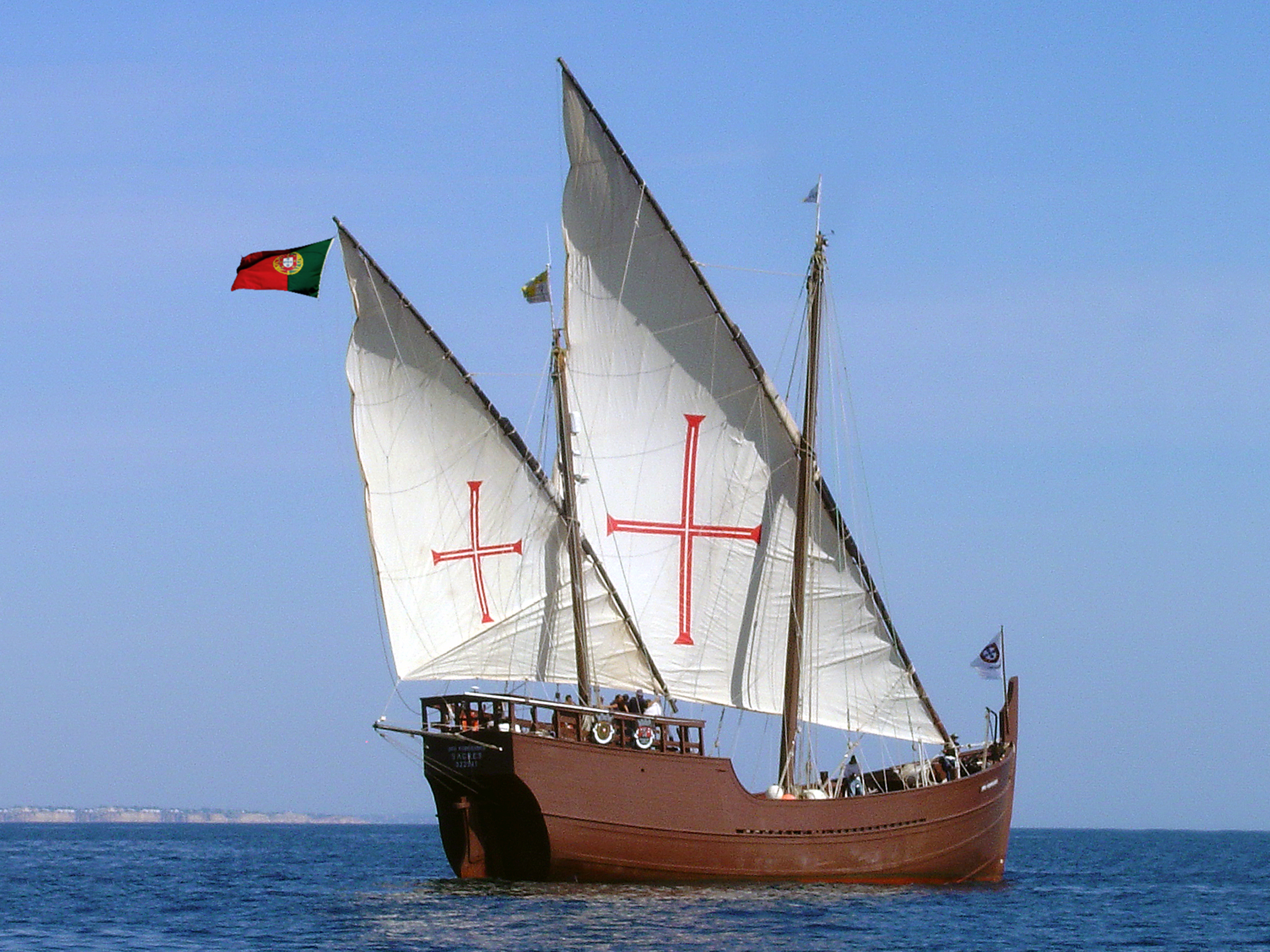
The caravel was a small but historically crucial ship of the fifteenth and early sixteenth centuries. Portuguese and Spanish mariners used it in Atlantic exploration because it was comparatively light, maneuverable, and capable of working efficiently in difficult coastal and wind conditions. Historical records tied to voyages along Africa and across the Atlantic show that the caravel helped expand European navigational reach well beyond earlier routine routes.
Caravels were smaller than later deep-ocean cargo ships, but their lighter hulls made them responsive and adaptable.
Lateen sails on many caravels allowed them to sail closer to the wind than heavier square-rigged craft, which mattered during coastal surveying and return voyages.
They became strongly associated with the early Portuguese exploration system and with the opening of Atlantic imperial routes.
The caravel is important not because it was the largest ship of its day, but because it made ambitious navigation practical.
The caravel became famous because it matched exploration needs unusually well. Portuguese and Iberian mariners needed ships that could work along unfamiliar coasts, handle variable winds, and still make long passages. The caravel, especially in its lateen-rigged forms, gave them a nimble and comparatively weatherly platform for reconnaissance, charting, and oceanic probing.
It mattered historically because it helped bridge coastal navigation and true oceanic expansion. While later and larger ships carried more cargo and artillery, the caravel was often the craft that found the route first. Chronicles of Iberian exploration, combined with surviving design traditions and iconography, place the caravel at the heart of fifteenth-century Atlantic discovery.
Highly maneuverable, relatively fast, and effective in variable winds and exploratory work.
Limited cargo capacity and not ideal as a heavy battle platform.
Best for reconnaissance, mapping, and early long-range exploration.
This vessel helps explain how maritime technology matched the needs of its era, from trade and exploration to warfare and state power.
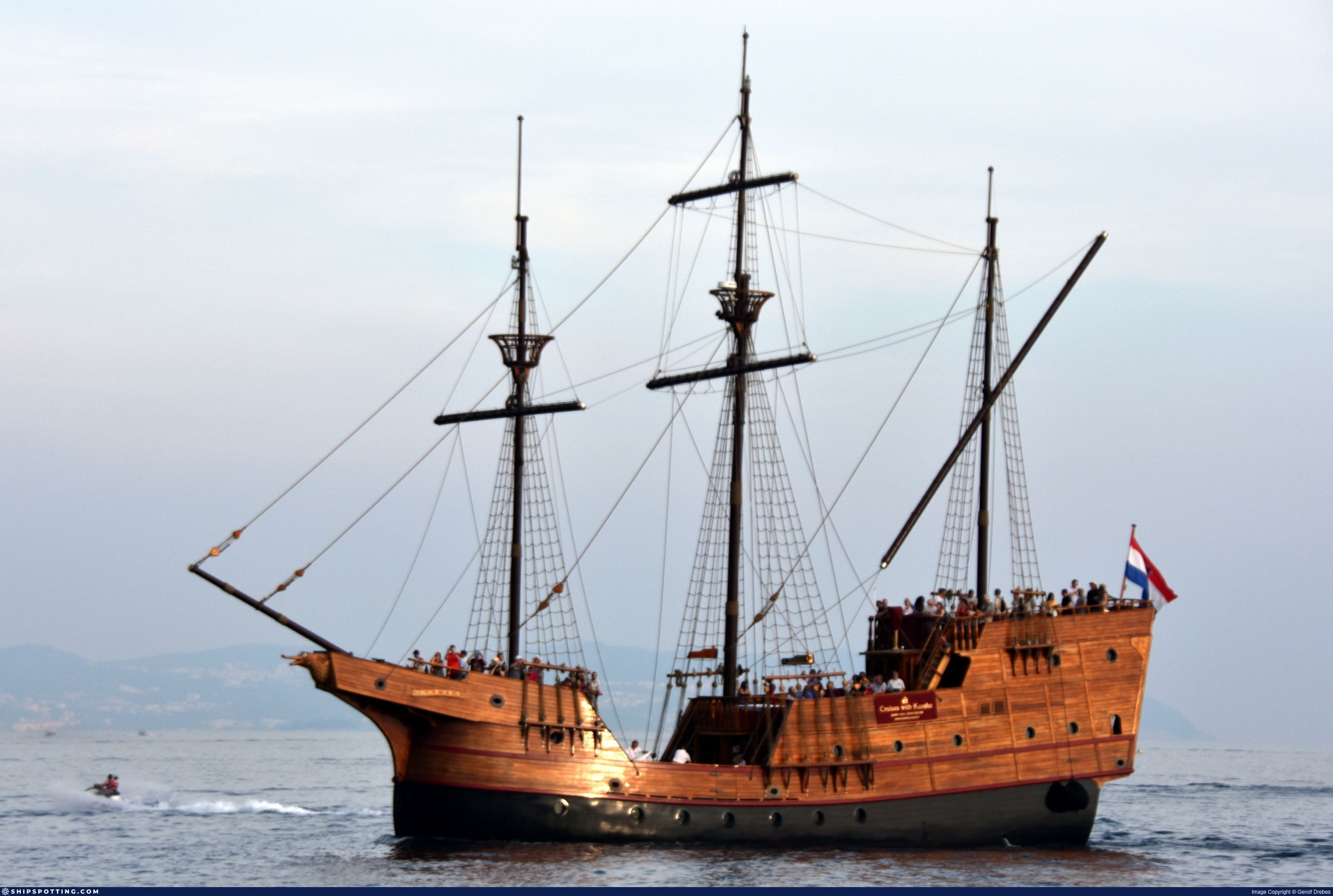
The carrack was one of the first true large ocean-going sailing ships of Europe. It had the volume to carry provisions, people, cargo, and artillery on long voyages, which made it essential to long-distance trade and exploration. Well-known ships such as the Santa María show the type's historical presence, but the bigger story is structural: the carrack helped bridge the gap between medieval commerce and global maritime empires.
Its full-bodied hull gave it far greater cargo capacity than lighter exploration craft.
Carracks were suitable for longer voyages because they could carry more food, water, and spare gear.
By combining square sails and lateen sails, the type balanced power with reasonable handling.
Carracks helped turn seafaring from regional exchange into transoceanic imperial logistics.
The carrack represented a larger and more ambitious stage of oceanic shipbuilding. It carried more provisions, more crew, and more cargo than the caravel, which made it useful for long imperial voyages and early intercontinental trade. Large forecastles and sterncastles gave it a towering profile that made an impression in both European waters and overseas encounters.
Historically, the carrack sits at the beginning of sustained Atlantic and Indian Ocean empire. Ships of this broad type were involved in Portuguese expansion around Africa, Spanish transatlantic ventures, and the creation of longer-distance armed commerce. Its very size shows how maritime states were beginning to think in global rather than regional terms.
Large carrying capacity, long-range endurance, and ability to combine trade with armed defense.
Top-heavy compared with later sailing warships and less nimble than smaller rigs.
Best for major voyages, imperial supply routes, and early global trade.
This vessel helps explain how maritime technology matched the needs of its era, from trade and exploration to warfare and state power.
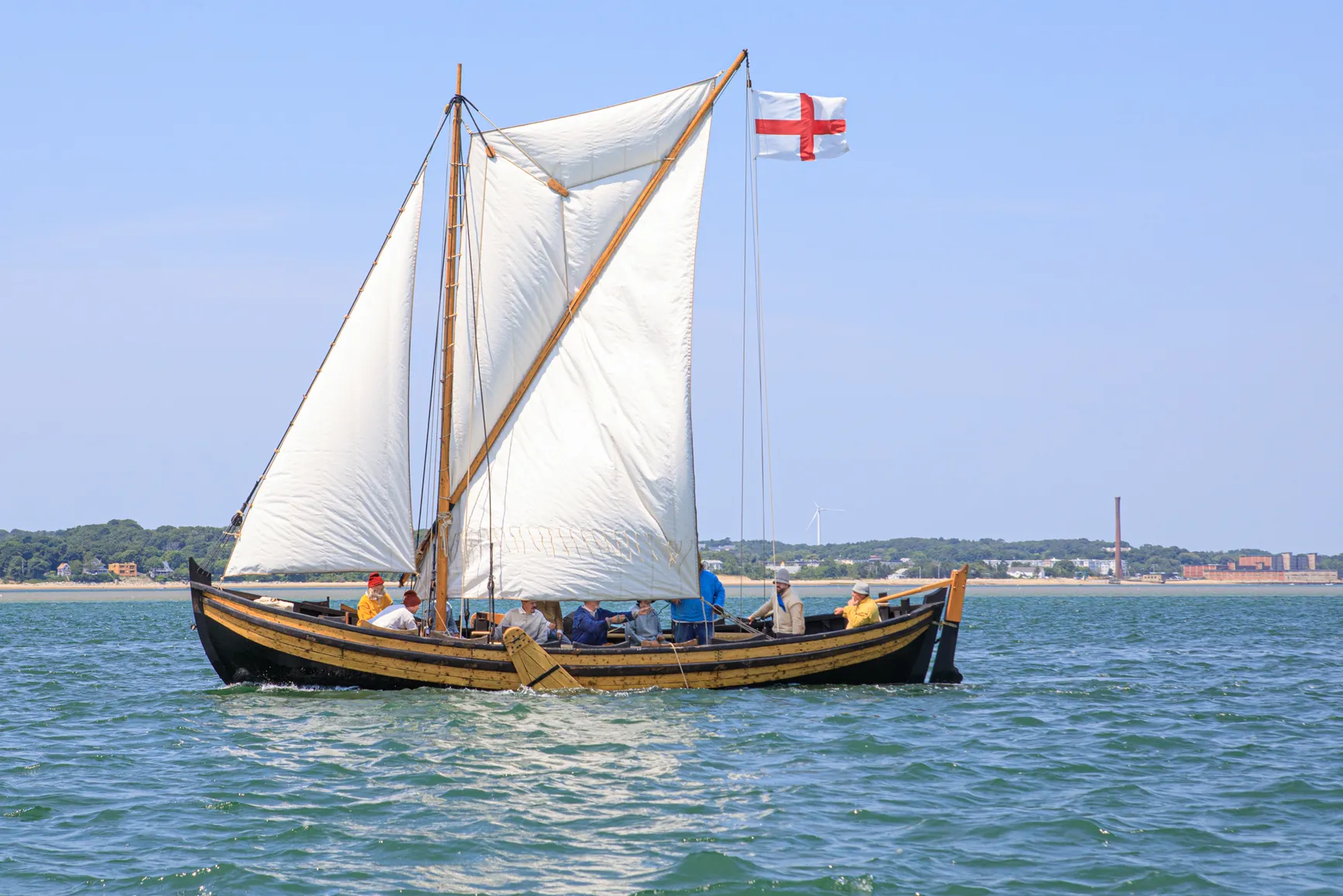
The shallop was a small, practical boat used in the shadow of larger ships but often far more often in daily life. It could be rowed or sailed and was useful in harbors, rivers, fisheries, and coastal transport. Colonial records and maritime descriptions show shallops doing the routine work that kept settlements and ports connected.
A shallop could move people, fish, tools, and supplies in waters where deep vessels could not go.
European colonies in North America and elsewhere depended on small craft like this for local communication and survival.
Simple hulls and flexible propulsion made shallops ideal for work rather than prestige.
This type reminds us that maritime history was not only made by famous warships, but also by ordinary working boats.
The shallop was a practical working boat rather than a glamorous flagship, but vessels like it were essential to coastal settlement, fishing, landing parties, and short-haul transport. In colonial settings especially, smaller craft connected larger ships offshore with rivers, beaches, and shallows that ocean-going hulls could not reach safely.
That practical role gives the shallop historical value. Maritime systems are not made only of famous warships. They depend on boats that can move people, food, water, tools, and messages in the last few miles. Contemporary records from Europe and colonial North America show just how important these versatile small craft were.
Versatile, shallow-draft, easy to crew, and useful in coasts and rivers.
Small payload and little protection in heavy seas or battle.
Best for transport, inshore fishing, landing parties, and support work.
This vessel helps explain how maritime technology matched the needs of its era, from trade and exploration to warfare and state power.
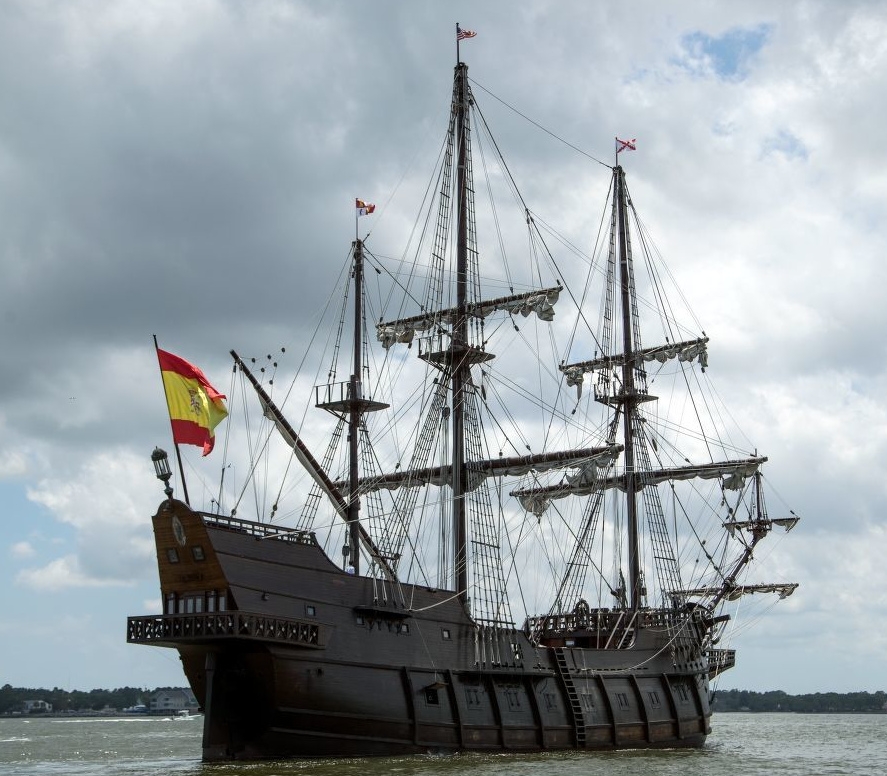
The galleon became one of the best-known ships of the sixteenth and seventeenth centuries because it combined heavy armament, transoceanic range, and useful cargo capacity. Spanish treasure fleets in particular made the type famous, but galleons also served in war, convoy defense, and imperial communications. Surviving plans, naval accounts, and wreck evidence show a vessel designed for the demands of global empire.
Broadside artillery made the galleon more dangerous than earlier ships that relied mainly on boarding.
These ships often carried silver, manufactured goods, soldiers, and state cargo across imperial sea lanes.
Compared with earlier bulky forms, the galleon generally had a leaner profile better suited to sailing and fighting.
The galleon symbolizes the stage when sea power, empire, and global trade became tightly connected.
The galleon became one of the signature ships of the sixteenth and seventeenth centuries because it balanced sailing performance with fighting power better than some earlier heavy ships. Compared with the carrack, the galleon often had a lower, longer hull that improved handling while still carrying substantial artillery. That made it suitable for convoy protection, imperial patrol, and major fleet battles.
Spanish treasure fleets and English naval development both helped make the galleon famous, but it was not tied to one empire alone. It represented a mature form of armed sail power in a world where maritime states were competing over silver, colonies, trade routes, and religious conflict. Documents, paintings, wrecks, and gunnery development all support its central place in early modern naval history.
Good blend of sail performance, range, cargo, and artillery for its era.
Could still be slow to respond compared with later purpose-built warships.
Best for armed ocean travel, treasure convoy duty, and line-ahead predecessor fighting.
This vessel helps explain how maritime technology matched the needs of its era, from trade and exploration to warfare and state power.
The East Indiaman was a major merchant ship built for long and profitable voyages between Europe and Asia. Operated by chartered companies such as the English and Dutch East India companies, these ships carried tea, spices, textiles, porcelain, silver, and sometimes troops. Company records and surviving hull data make clear that they were commercial giants of their day, often armed because the routes they sailed were both wealthy and dangerous.
East Indiamen were built for cargo value, endurance, and enough defensive strength to survive contested waters.
They connected Europe to South Asia, Southeast Asia, and China in a system that reshaped consumption and empire.
Though merchant ships, many carried cannon and sailed in convoy because piracy and war were constant risks.
These vessels were floating engines of corporate empire, showing how trade and state power could merge.
The East Indiaman was built for one of the most demanding jobs in maritime history: carrying expensive cargo across enormous distances while still being able to defend itself. These ships linked Europe with Asian trade in textiles, tea, spices, and other goods whose value justified long, risky voyages. Their hulls were capacious, and many carried respectable gun armaments to deter privateers and raiders.
Historically, the East Indiaman reflects the merger of trade and state-backed violence. Chartered companies such as the English and Dutch East India companies were commercial enterprises, but they operated inside imperial competition. The ship therefore sits at the crossroads of capitalism, naval protection, global commerce, and colonial power.
Excellent cargo endurance, strong ocean range, and enough armament to discourage attack.
Less agile than dedicated warships and less efficient than pure cargo carriers on shorter routes.
Best for long-haul, high-value commercial voyages under threat.
This vessel helps explain how maritime technology matched the needs of its era, from trade and exploration to warfare and state power.
The term man-of-war usually refers to a heavily armed state warship, especially the great ships built for line-of-battle warfare. In the seventeenth and eighteenth centuries, these vessels formed the backbone of major navies. Admiralty records, ship lists, and battle reports show that they were strategic instruments built not just to win fights, but to represent state finance, industrial capacity, and maritime prestige.
Multiple gun decks allowed devastating broadsides that defined fleet combat.
These ships fought in formal lines, a tactic that depended on discipline, signaling, and uniformity.
Only major powers could regularly build, crew, and maintain fleets of such expensive vessels.
The man-of-war stands at the center of classic naval rivalry in the age of European great powers.
The man-of-war was the specialized battle fleet vessel of the sailing age. By the time fleets fought in formal lines of battle, warships were being designed increasingly around gunnery, broadside weight, and staying power rather than cargo or general versatility. This made them expensive but central to the naval competition of Britain, France, Spain, and other powers.
The ship mattered because it was one of the clearest instruments of state power in the eighteenth century. Maintaining a battle fleet required dockyards, timber supply, trained officers, gun foundries, and huge crews. A man-of-war therefore represented not only naval force but national administrative capacity. Logs, plans, dockyard records, and battle narratives make this one of the best documented ship traditions in history.
Heavy broadside fire, disciplined battle role, and strong endurance in fleet warfare.
Huge cost, large crew demand, and reduced flexibility compared with smaller cruisers.
Best for formal naval battle and power projection by major states.
This vessel helps explain how maritime technology matched the needs of its era, from trade and exploration to warfare and state power.
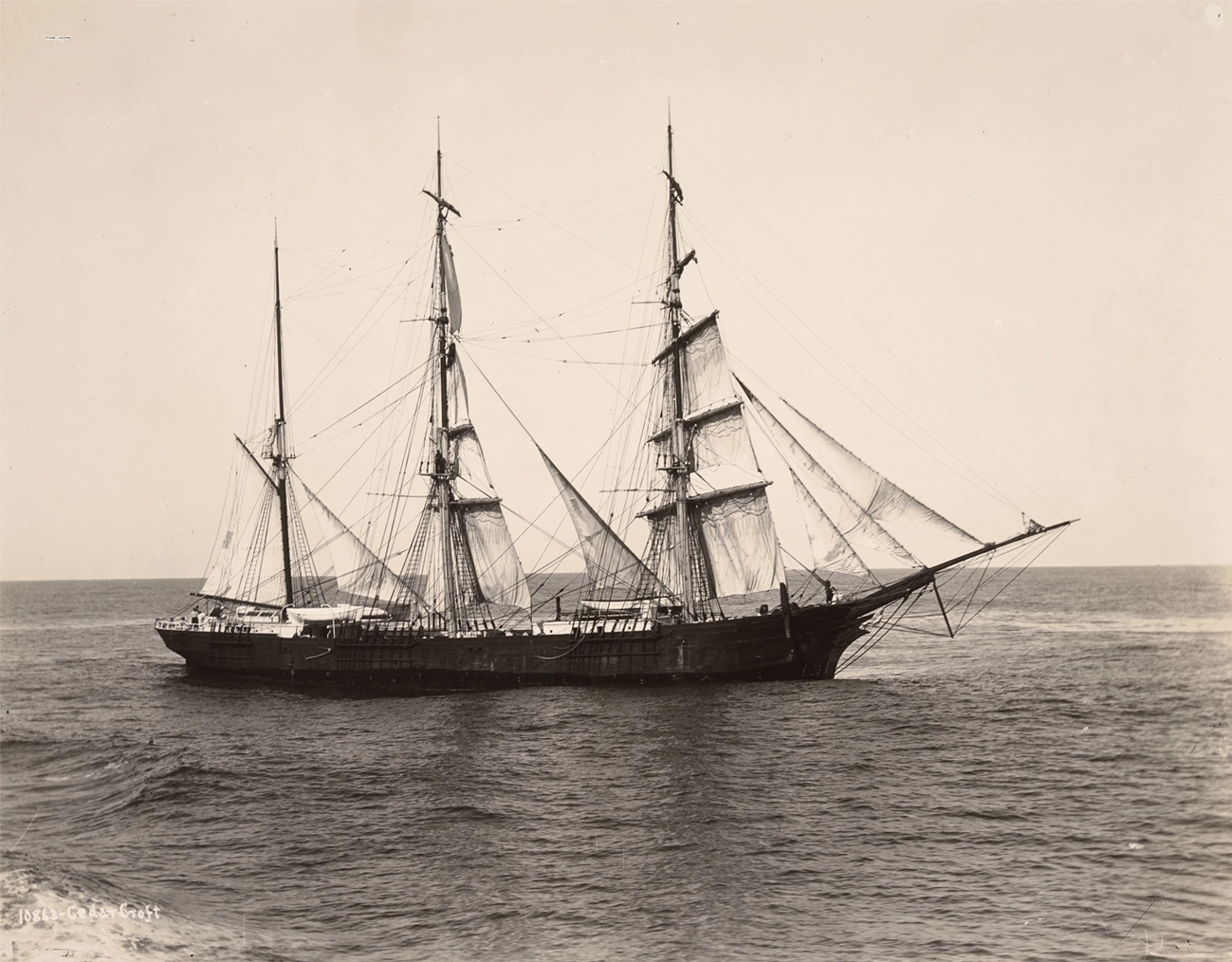
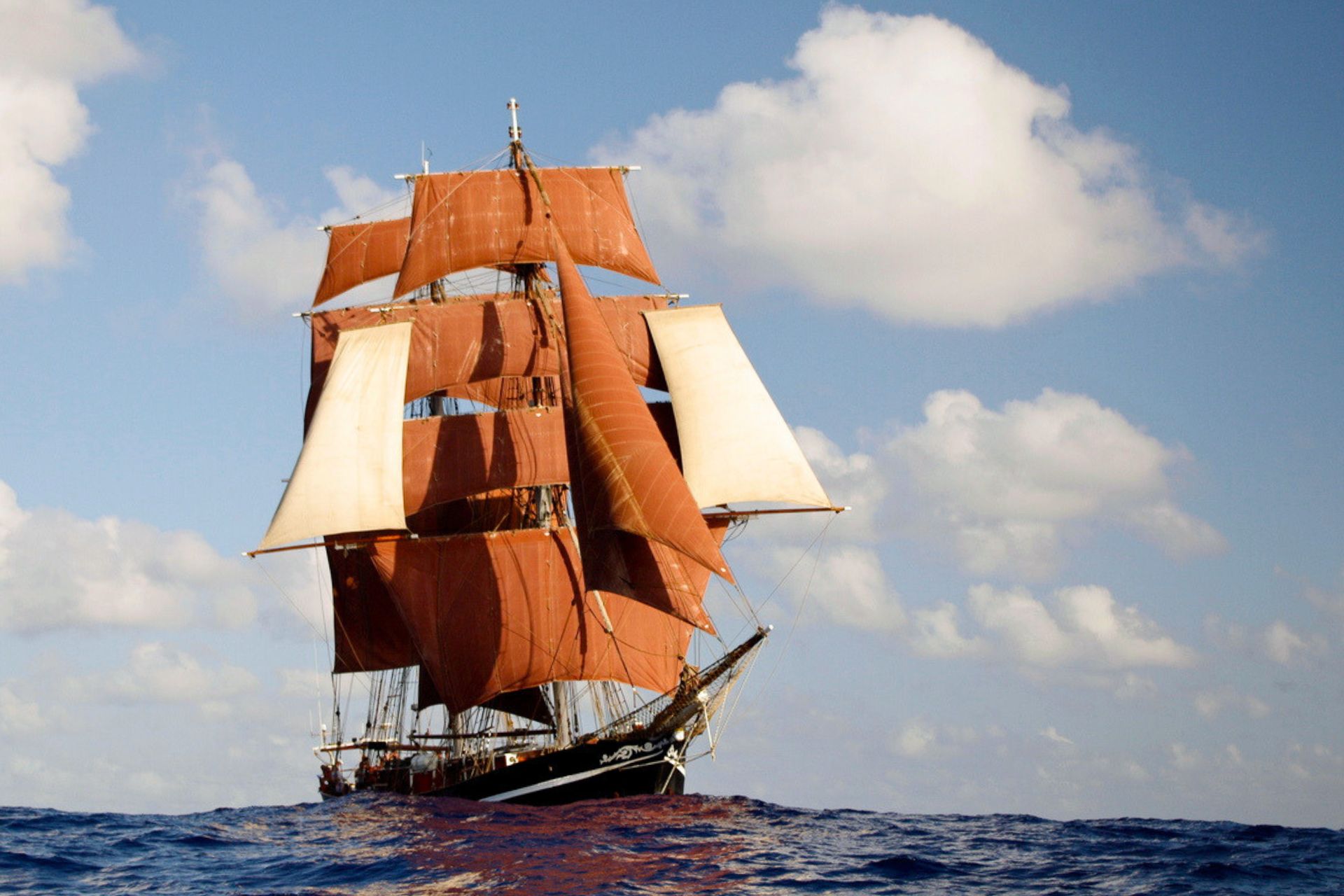
The barque was a practical multi-masted ship with square sails on the fore and main masts and fore-and-aft rigging aft. That arrangement reduced labor while preserving good ocean-going performance. In the nineteenth century especially, barques became common in long-distance trade because they were economical to operate with smaller crews than some full-rigged ships.
The mixed rig gave owners a useful balance between power, handling, and labor cost.
Barques carried timber, grain, nitrates, wool, and many other cargoes across global routes.
They remained important even after steam expanded because they could still be profitable on certain routes.
The barque shows how ship design often changed for economic reasons as much as purely technical ones.
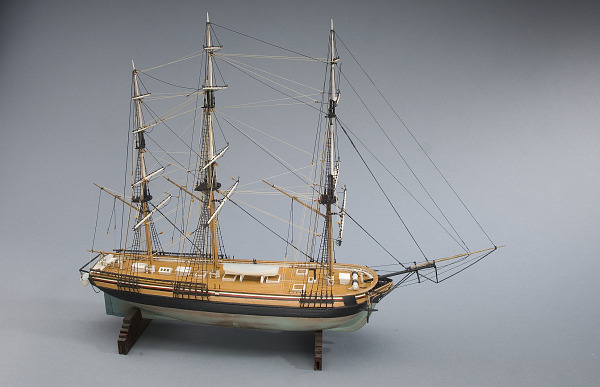
The barque became important in the long nineteenth century because it offered a practical compromise between carrying power and labor cost. Its rig reduced manpower needs compared with some fully square-rigged ships while still allowing efficient long-distance movement of bulk cargoes. That helped keep sail commercially relevant even after steam began to spread.
Its history shows that maritime technology does not change in a single clean step. Steam did not instantly replace sail everywhere. Instead, shipowners balanced route, cargo, labor, and fuel economics. The barque survived because it remained useful, especially on long routes where coal logistics or infrastructure made steam less attractive.
Efficient sail plan, useful cargo capacity, and lower crew needs than some older sailing rigs.
Still dependent on wind and slower in scheduling reliability than steam.
Best for economical long-haul cargo under sail.
This vessel helps explain how maritime technology matched the needs of its era, from trade and exploration to warfare and state power.
The ketch was a two-masted vessel with a mainmast forward and a smaller mizzen set ahead of the rudder post. It appeared in fishing, coastal transport, naval support, and recreational sailing. Maritime records from northern Europe show that the type was valued because it was manageable, practical, and adaptable to working life at sea.
Ketches were especially useful where reliability and controllable handling mattered more than prestige.
The divided rig could be handled by relatively small crews, which reduced operating demands.
They served in fisheries, freight work, and even bomb vessel conversions in naval service.
The ketch belongs to the long tradition of sensible, useful boats that kept maritime economies moving.
The ketch was a versatile two-masted rig used in fishing, coasting, small trade, and naval auxiliary roles. Its configuration made sail handling manageable for modest crews, which gave it practical value across many working environments. In some contexts it was also adapted for specialized uses such as bomb vessels or survey work.
What matters historically is not only glamour but utility. Maritime history depended on craft that could be run economically, repaired locally, and adapted to local winds and jobs. The ketch belongs to that broad family of useful, everyday sea craft that kept ports supplied and maritime communities functioning.
Manageable rig, flexible service roles, and efficient operation with smaller crews.
Limited heavy combat capability and less raw speed than sharper specialist designs.
Best for practical coastal work, fishing, and utility sailing.
This vessel helps explain how maritime technology matched the needs of its era, from trade and exploration to warfare and state power.
The brigantine was a fast and manageable two-masted ship closely associated with trade, privateering, and small-scale naval work. Because it balanced carrying capacity with speed, it could move cargo, chase prizes, or evade stronger opponents. Port records and privateering commissions from the Atlantic world show why the type became so common.
It was quick enough for pursuit but large enough to make voyages profitable.
Brigantines were well suited to commerce raiding, where speed and flexibility mattered more than line-of-battle power.
Merchants used them on regional and intercolonial routes that demanded reliable but not gigantic ships.
The brigantine shows the overlap between legal trade, licensed raiding, and piracy in the sailing world.
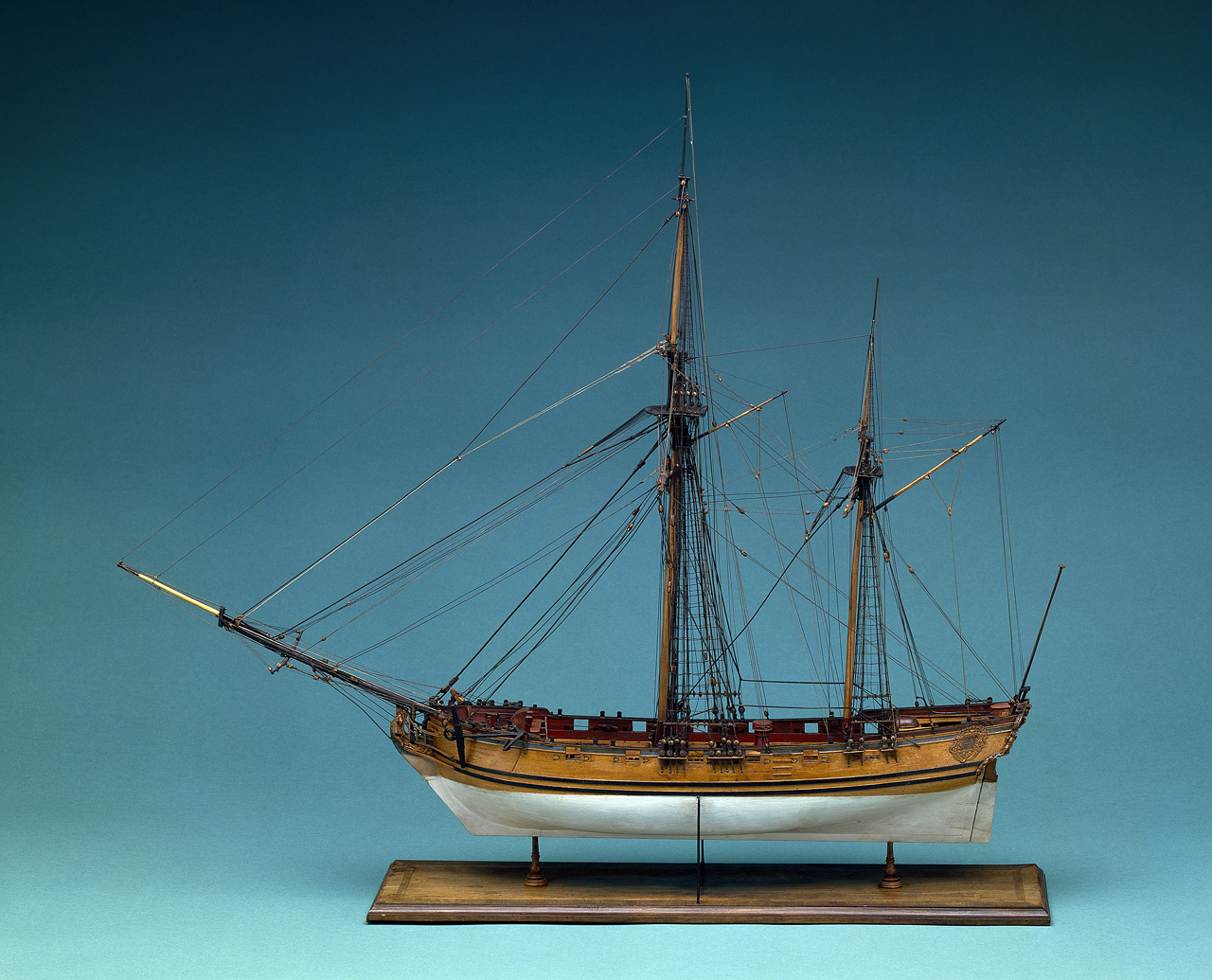
The brigantine occupied a useful middle ground between heavy warships and humble coasters. Fast enough for dispatch, patrol, or commerce raiding, but still able to carry respectable cargo or armament, it became associated with privateering, policing, and flexible overseas service. Smaller powers and independent operators found this kind of ship especially attractive.
Its story highlights a maritime reality that large battle fleets do not cover well: much of the world at sea was controlled by cruisers, escorts, and quick-response vessels rather than first-rate giants. Port records, naval rosters, and privateering history all show the value of such adaptable medium ships.
Fast, versatile, and effective for patrol or raiding roles.
Outgunned by ships of the line and with less carrying power than bigger merchants.
Best for escort, dispatch, raiding, and independent cruising.
This vessel helps explain how maritime technology matched the needs of its era, from trade and exploration to warfare and state power.
The frigate was one of the most effective and admired warships of the eighteenth and early nineteenth centuries. Faster and more independent than ships of the line, frigates could scout ahead, escort convoys, raid commerce, deliver dispatches, and fight single-ship actions. Naval logs from Britain, France, and the United States show how often frigates served as the active edge of sea power.
A main gun deck gave solid fighting strength without the immense cost of larger line ships.
Frigates often worked alone or in small groups, which made them ideal for wide-ranging missions.
Because they moved constantly and visited distant stations, frigates often represented a navy abroad.
They were the workhorses of blue-water naval presence in the late sailing age.
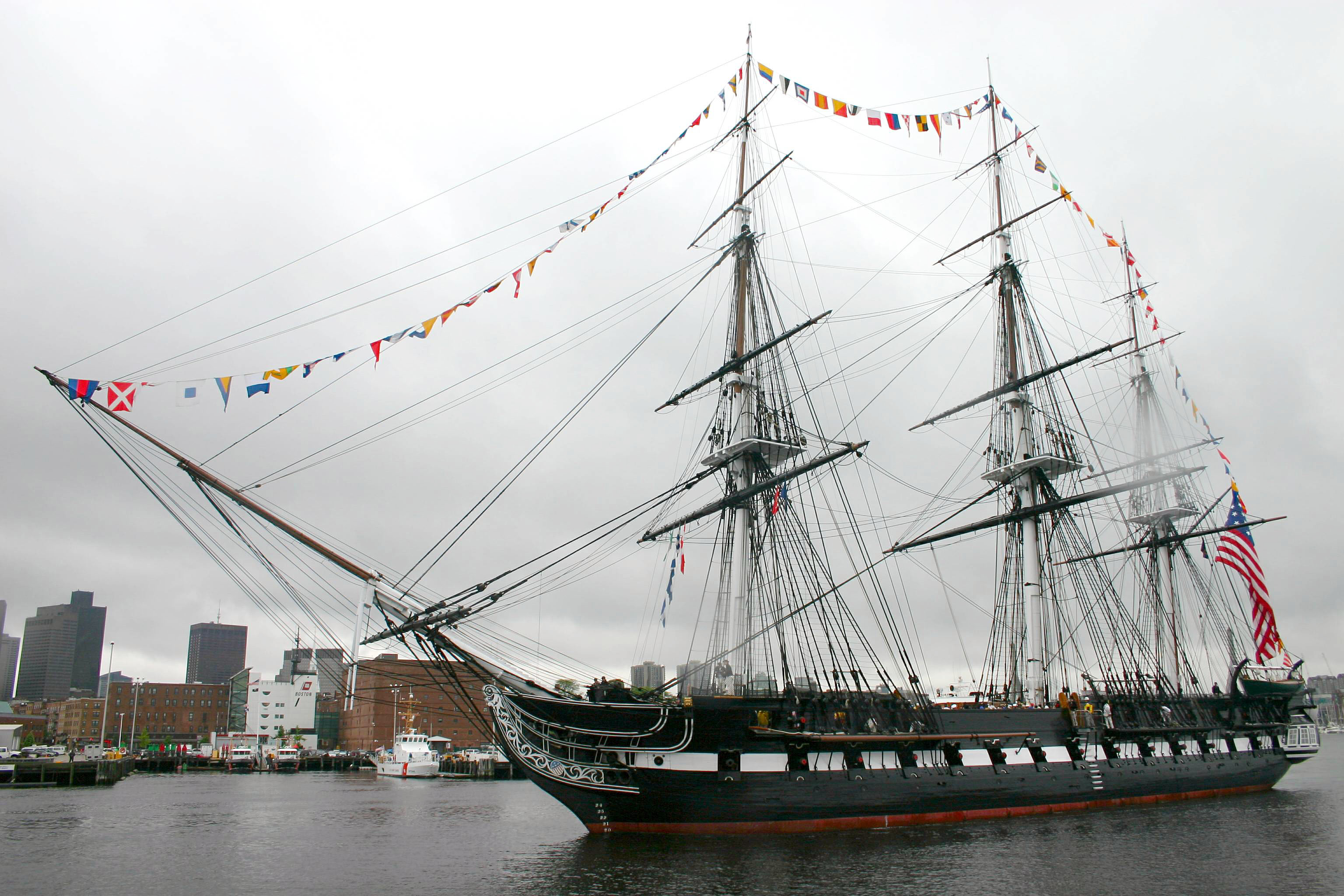
The frigate was one of the most admired warships of the age of sail because it combined respectable firepower with high speed and operational independence. Unlike ships of the line, frigates usually did not stand in the main battle line, but they were often the eyes, messengers, hunters, and long-range enforcers of a navy. They were ideal for reconnaissance, commerce protection, and pursuit.
Historically, frigates mattered because empires required more than battle fleets. They needed ships that could show the flag, carry news, patrol trade routes, and engage enemies below line-of-battle strength. Naval correspondence from Britain, France, and the young United States shows just how often frigates formed the practical cutting edge of maritime presence.
Fast cruising speed, strong range, and excellent balance of firepower and mobility.
Not built to trade broadsides with the heaviest battle ships for long.
Best for scouting, escort, raiding, and showing naval presence across distant stations.
This vessel helps explain how maritime technology matched the needs of its era, from trade and exploration to warfare and state power.
The word sloop covered several small sailing vessel forms, but in naval and maritime practice it often meant a compact, useful craft for patrol, dispatch, escort, or local trade. Sloops mattered because they were cheap to build and useful almost everywhere. Admiralty classifications and merchant records show that small vessels did a large share of everyday maritime work.
Their scale made them economical and easier to operate than larger warships or traders.
Sloops of war handled patrol, policing, and message-carrying roles that bigger ships could not do as efficiently.
In commerce, similar small rigs supported short-haul coastal movement and local exchange.
The sloop demonstrates that maritime systems relied on layers of vessel size, not just flagship types.
The term sloop covered more than one design over time, but in naval history it often referred to a relatively small warship used for patrol, escort, anti-smuggling, dispatch, or colonial service. These ships were not glamorous compared with first rates, yet they filled vital gaps in imperial control and local security.
This makes the sloop historically important in a practical sense. Policing coasts, carrying orders, surveying waters, and chasing smaller enemies often mattered more day to day than large battle actions. Smaller warships kept empires connected and maritime law enforced on the edges.
Economical, flexible, and effective in small-warship duties.
Limited broadside weight and reduced endurance compared with larger cruisers.
Best for patrol, escort, survey, and local naval enforcement.
This vessel helps explain how maritime technology matched the needs of its era, from trade and exploration to warfare and state power.
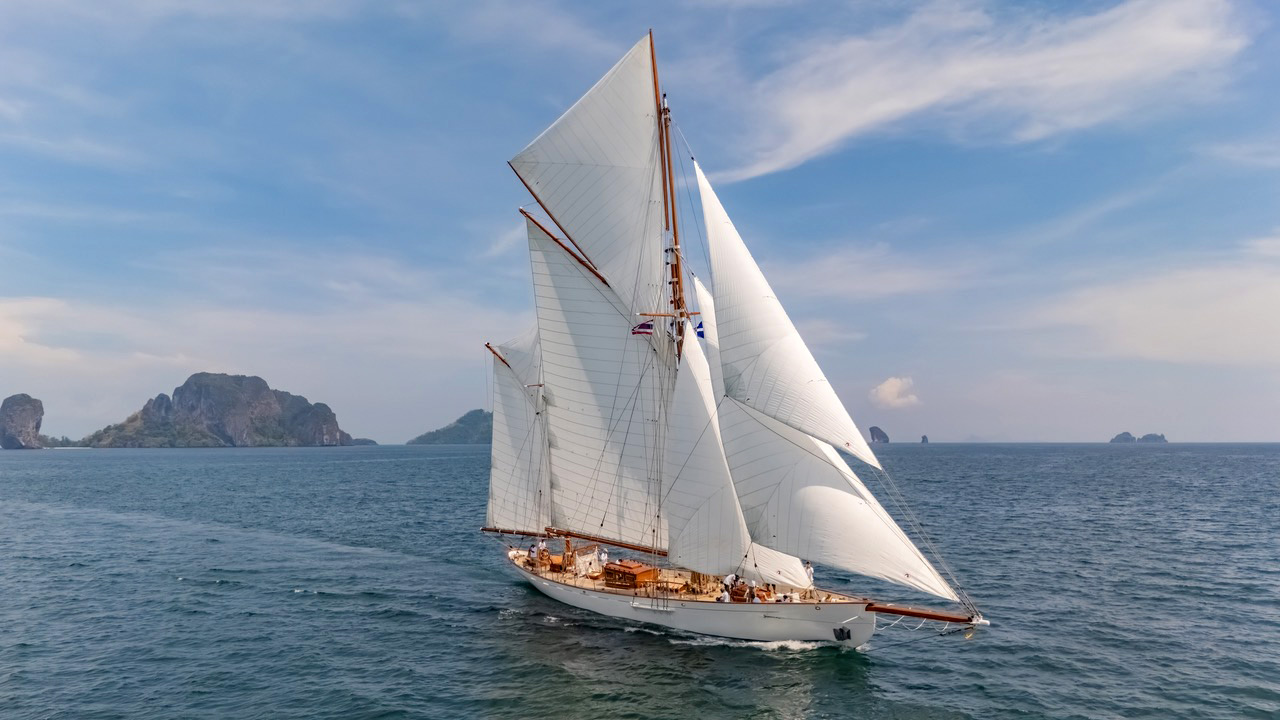
The schooner became famous for speed, clean handling, and usefulness in coastal and regional waters. With fore-and-aft sails, it could be worked efficiently and often sail well to windward. In North America especially, schooners became central to fishing, coasting trade, pilot service, and later racing traditions.
Fore-and-aft sails helped schooners work in changing coastal conditions better than many square-rigged vessels.
They were especially important where fast point-to-point movement mattered more than maximum cargo volume.
The schooner became deeply associated with Atlantic North American shipbuilding and maritime identity.
It is one of the clearest examples of a vessel shaped by practical local conditions and then celebrated for beauty.
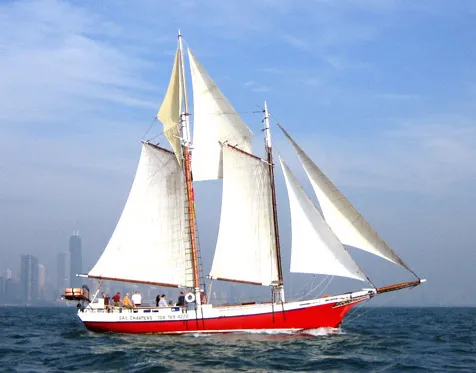
The schooner became one of the most successful coastal and regional rigs of the Atlantic world. Its fore-and-aft sails allowed efficient handling and good windward performance, making it attractive for fishing, coasting, pilot service, smuggling, privateering, and even racing. It was especially well suited to routes with frequent port calls or complex coastlines.
Its broad use across North America and the Atlantic shows how ship design follows working needs. The schooner thrived because it was practical, not because it dominated formal battle fleets. Port records, fisheries history, and surviving hull studies all point to the schooner as one of the great utility vessels of the early modern and modern coast.
Quick handling, good coastal performance, and versatile commercial use.
Usually smaller and less heavily armed than major naval vessels.
Best for coasting, fishing, regional trade, and fast practical service.
This vessel helps explain how maritime technology matched the needs of its era, from trade and exploration to warfare and state power.
Packet ships were built around regularity. Unlike many earlier merchants that sailed when profitable or convenient, packet lines aimed to keep schedules for mail, passengers, and freight. That made them especially important in the eighteenth and nineteenth centuries, when states, businesses, and families all relied more heavily on predictable communication across water.
Regular departures mattered because they reduced uncertainty in trade and information flow.
Packets carried letters, newspapers, officials, ordinary travelers, and valuable freight.
Before telegraph cables, fast and dependable packet service was a major part of long-distance coordination.
Packet ships mark the transition toward the modern expectation that transport should be systematic rather than occasional.
Packet ships were designed around regularity. They carried mail, passengers, and valuable light cargo on scheduled routes, which made them part of an emerging communications network that tied states, businesses, and families together across long distances. Unlike ships that waited for a full cargo or a convenient departure, packet service aimed at predictability.
That made the packet ship historically significant in a different way from a warship or treasure carrier. It helped turn the ocean into a communication corridor. In the age before telegraph cables became dominant, the speed and reliability of packet routes affected diplomacy, commerce, migration, and news circulation.
Reliable scheduling, decent speed, and strong value for mail and passengers.
Less optimized for bulk cargo and vulnerable to weather compared with later steam packet service.
Best for communications, passenger movement, and timely light cargo.
This vessel helps explain how maritime technology matched the needs of its era, from trade and exploration to warfare and state power.
The clipper was a fast merchant sailing ship designed to win time-sensitive routes in the nineteenth century. Its long narrow hull, tall rig, and heavy sail area made it capable of remarkable speed, especially on tea and California gold rush routes. Newspapers, race records, and surviving ship data all show that the clipper represented the competitive extreme of sail before steam fully took over.
Clippers often sacrificed some cargo capacity in exchange for faster passages.
They mattered most when cargo value depended on arriving first, such as fresh tea markets or rush-era passenger demand.
Their sharply lined hulls and towering rigs made them among the most elegant ships ever built.
The clipper was both the peak of commercial sail performance and a sign that global trade was becoming increasingly time driven.
The clipper was built for speed above all. Long, fine hull lines and towering sail plans made it one of the most dramatic expressions of competitive commercial shipping under sail. Clippers excelled in trades where time had high value, such as tea, mail, and certain luxury goods, and they became famous for record passages and close commercial rivalries.
Their fame can make them seem like the peak of sailing success, but they were specialized vessels shaped by a narrow economic window. They mattered because they reveal how market pressures could drive extreme design choices. Once steam and infrastructure gained the upper hand, the clipper’s advantages became harder to maintain, but its legend endured.
Outstanding speed and prestige on routes where time was money.
Demanding rig, less forgiving economics, and limited advantage once steam schedules matured.
Best for high-value time-sensitive cargo under sail.
This vessel helps explain how maritime technology matched the needs of its era, from trade and exploration to warfare and state power.
The paddle steamer was one of the first successful steam ship forms, using side wheels or a stern wheel to convert engine power into movement. Early steam navigation on rivers and coasts depended heavily on this design. Timetables, industrial records, and famous vessels from the Mississippi to the Clyde show how paddle steamers changed expectations by making routes less dependent on wind and more dependent on machinery and fuel.
Steam allowed more predictable movement than sail alone, especially on inland routes.
Paddle propulsion worked particularly well in river systems and sheltered waters.
These vessels transformed travel by making scheduled movement more practical for large numbers of people.
The paddle steamer represents the first major break from thousands of years of wind-and-oar dominance.
Paddle steamers marked an early stage in the mechanical transformation of maritime travel. They reduced dependence on wind and allowed more regular service on rivers, coasts, and later some sea routes. Their role was especially important on inland waterways, where current, narrow channels, and schedule demands favored powered vessels.
Historically, paddle steamers belong to the age when industrial energy began to reshape transport networks. They connected river towns, supported trade expansion, and changed expectations about timing. They were not the final answer in marine propulsion, but they were a crucial bridge between sail dominance and later screw-driven steam fleets.
Reliable propulsion independent of wind and very useful on rivers and near coasts.
Paddle wheels were exposed and less efficient in many sea conditions than screws.
Best for river routes, ferries, and early scheduled steam service.
This vessel helps explain how maritime technology matched the needs of its era, from trade and exploration to warfare and state power.
The ironclad marked a decisive break with wooden warship traditions. Armored plating, steam propulsion, and shell-firing guns made older fleets vulnerable almost overnight. The Battle of Hampton Roads in 1862, featuring USS Monitor and CSS Virginia, became the best-known proof that naval warfare had entered a new age in which armor and machinery mattered more than rows of wooden gun decks.
Iron plating let ships survive gunfire that would devastate earlier wooden hulls.
Ironclads combined industrial metallurgy, steam propulsion, and new gun systems in one platform.
Navies around the world reacted quickly once armored ships proved themselves in combat.
The ironclad matters not just as a ship type, but as evidence of industrial war reaching the sea.
The ironclad announced that the wooden battle fleet was becoming obsolete. Armor plating, shell guns, and steam power changed naval logic so rapidly that ships launched as cutting-edge could become outdated within a few years. Famous encounters in the American Civil War and European naval development made clear that protection and powered maneuver now mattered as much as, or more than, traditional sailing broadside methods.
Its importance lies in transition. The ironclad was not yet the final modern battleship, but it broke the old system. Naval planners, dockyards, and governments suddenly faced an arms race in armor, artillery, and engine power. That technological acceleration is one of the defining stories of nineteenth-century naval history.
Armor protection, powered movement, and strong resilience against older wooden fleets.
Many early types were slow, mechanically complex, and quickly overtaken by later designs.
Best for transitional armored warfare and coastal or fleet shock presence.
This vessel helps explain how maritime technology matched the needs of its era, from trade and exploration to warfare and state power.
The modern destroyer is a fast multi-role warship designed to protect fleets, escort larger ships, launch missiles, fight submarines, and defend against aircraft. The type began in response to the torpedo boat threat, but twentieth- and twenty-first-century destroyers became some of the most flexible combat ships afloat. Naval procurement and combat history show that destroyers remain central because they can adapt to many mission sets at once.
Early destroyers were built to counter small torpedo craft threatening battleships.
Over time the type expanded into anti-submarine, anti-air, strike, and command roles.
Radar, sonar, guided missiles, helicopters, and digital combat systems define the modern destroyer.
Destroyers show how modern naval power depends on layered defense, sensors, and versatility rather than gun caliber alone.
The destroyer emerged to counter new threats, especially torpedo craft, but rapidly became one of the most useful warship types of the modern era. By the twentieth century it could escort larger units, hunt submarines, screen fleets, launch torpedoes, provide anti-air defense, and strike land or sea targets. Few warship categories became so broadly multifunctional.
Its historical importance comes from adaptability. Modern naval warfare required ships that could react quickly to changing threats rather than only deliver heavy gunfire. The destroyer became the workhorse of fleet operations in both world wars and beyond, appearing wherever navies needed speed, sensors, and flexible combat power.
Fast, versatile, and effective in escort, anti-submarine, and strike roles.
Smaller than capital ships and dependent on logistics and task-group coordination for major sustained operations.
Best for modern fleet screening, escort, and multi-role warfare.
This vessel helps explain how maritime technology matched the needs of its era, from trade and exploration to warfare and state power.
The container ship transformed world trade by standardizing cargo into stackable steel containers. That change reduced loading time, labor complexity, theft, and port confusion on an enormous scale. Historians of globalization often point to containerization as one of the clearest reasons twentieth-century supply chains became faster, cheaper, and truly planetary.
The container allowed goods to move directly between truck, train, and ship with minimal repacking.
Port time dropped dramatically, which lowered shipping cost and increased reliability.
Modern retail and manufacturing systems depend heavily on container vessels and their linked terminals.
The container ship may be less romantic than a galleon, but few vessels have changed everyday life more.
The container ship transformed global trade by standardizing cargo handling. Instead of moving goods crate by crate, ports could shift sealed containers efficiently between ship, truck, and rail. That drastically lowered time in port and reduced labor costs, theft, and handling complexity. In practical terms, containerization did for freight what the packet system once did for communications: it made global movement more regular, scalable, and predictable.
Its historical significance is enormous. Modern supply chains, retail distribution, and manufacturing geography all depend on the container system. The ship itself is therefore not merely a transport machine but part of a logistical revolution. Port redesign, crane systems, and intermodal infrastructure all grew around it.
Massive cargo efficiency, low unit transport cost, and unmatched integration with global logistics.
Little combat value, great dependence on port infrastructure, and vulnerability to chokepoints or supply disruption.
Best for long-distance commercial freight at enormous scale.
This vessel helps explain how maritime technology matched the needs of its era, from trade and exploration to warfare and state power.
Zheng He led seven state-sponsored expeditions across the Indian Ocean in the early fifteenth century. Ming records and later historical study show fleets reaching Southeast Asia, India, Arabia, and East Africa. His voyages were not simple exploration in the later European sense; they were highly organized demonstrations of imperial prestige, diplomacy, tribute collection, and commercial presence.
Zheng He's voyages were funded and directed by the Ming court, showing the scale of Chinese maritime ambition at the time.
Although exact numbers are debated, the expeditions were enormous by contemporary standards and involved a wide range of support vessels.
The voyages carried envoys, gifts, and political messages, creating visible ties between the Ming state and ports across the Indian Ocean.
Zheng He remains essential because his career proves that large-scale blue-water state expeditions were not unique to Europe.
Christopher Columbus is remembered for the 1492 voyage that connected Europe and the Americas in a permanent way. His career is historically important, but it must also be understood in full: his voyages opened the door to colonization, conquest, disease spread, and systems of exploitation that devastated Indigenous peoples. That is why modern historical treatment of Columbus is both significant and deeply critical.
Columbus sailed under the patronage of the Spanish Crown, showing how exploration and state ambition were linked.
His voyage did not just reveal a route. It triggered a long process of imperial expansion and biological exchange.
Historians now place far more emphasis on Indigenous experience and on the destructive outcomes of European arrival.
Columbus matters because his voyages reshaped world history, even though the legacy is not heroic in a simple sense.
Magellan commanded the expedition that began the first circumnavigation of the globe. He himself died in the Philippines in 1521, but the surviving ship Victoria completed the voyage under Juan Sebastián Elcano. The expedition gave Europeans hard practical evidence of the scale of the Earth, the connectedness of oceans, and the terrible human cost of long-distance sailing in the early modern period.
The voyage aimed to find a western route to the Spice Islands and to strengthen imperial-commercial competition.
Its crossing of the Pacific revealed the vast distance between the Americas and Asia in unmistakable practical terms.
The expedition suffered severe deaths from hunger, disease, conflict, and exhaustion.
Magellan's expedition helped prove global circumnavigation not as theory, but as operational reality.
Francis Drake was a privateer, explorer, and naval commander whose career tied profit, violence, and national rivalry together. English sources celebrated him as a hero, while Spanish sources saw him as a pirate and threat. His circumnavigation and his role in the conflict with Spain show how maritime power in the sixteenth century often blurred the line between state service and private plunder.
Drake operated in a world where raiding enemy commerce could be politically useful and personally profitable.
His attacks on Spanish shipping reflected the growing naval competition of European powers.
He became a celebrated national figure in England, which shows how sea raiding could be turned into patriotic myth.
Drake matters because he represents the aggressive seaborne expansion of Elizabethan England.
Grace O'Malley, also known as Gráinne Mhaol, was an Irish maritime leader active in the sixteenth century. She operated in a world of clan politics, coastal trade, armed shipping, and negotiation with English power. Irish tradition, English administrative records, and later historiography all present her as a rare but real example of a woman exercising serious maritime and political authority in a violent era.
She commanded ships, controlled coastal influence, and used maritime strength as part of local politics.
Her famous meeting with Elizabeth I reflects how she moved between armed resistance and strategic negotiation.
Her world was built on transport, rents, fishing, and sea-based leverage as much as on battle.
Grace O'Malley stands out because she shows that maritime leadership was not limited to the usual male imperial narratives.
Horatio Nelson became the most famous admiral of the Napoleonic Wars because he repeatedly won decisive victories and cultivated an image of bold leadership. Battles such as the Nile, Copenhagen, and Trafalgar made him central to British naval memory. Dispatches, memoirs, and state commemoration turned Nelson into a symbol of national survival at sea.
Nelson is remembered for breaking with rigid caution and seeking close, decisive battle.
He inspired loyalty in subordinates, which mattered greatly in the confusion of age-of-sail combat.
His final victory at Trafalgar helped secure British command of the sea during the Napoleonic conflict.
Nelson's career shows how one commander could become inseparable from national maritime identity.
James Cook was a naval officer, navigator, and surveyor whose Pacific voyages produced some of the most accurate charts of the eighteenth century. His work greatly expanded European geographic knowledge, but like other exploration histories it also fed later imperial expansion. Journals, charts, and scientific records from his voyages remain some of the strongest documentary evidence in maritime history.
Cook's precision in charting coastlines made his voyages scientifically important, not just geographically dramatic.
His expeditions carried astronomers, artists, and naturalists, linking navigation with Enlightenment science.
Accurate charts later made colonization and naval access easier for expanding empires.
Cook represents the close relationship between exploration, science, and empire.
Blackbeard, probably Edward Teach, became famous less because of long-term strategic success and more because of image, intimidation, and legend. Contemporary reports describe him using a fearsome appearance, including slow-burning fuses in his hair or beard during battle. His short career reveals how piracy depended on reputation, opportunism, and the weaknesses of imperial enforcement after major wars.
Blackbeard understood that fear could win a fight before the first shot was fired.
His career grew out of a wider post-war Atlantic world full of underemployed sailors and weak local enforcement.
He was active for only a brief period, yet his legend far outgrew many longer careers.
Blackbeard shows how myth and maritime history often merge, especially in the story of piracy.
Yi Sun-sin was a Korean admiral whose leadership during the Imjin War made him one of the most respected naval commanders in world history. He used preparation, local knowledge, disciplined fleets, and tactical positioning to blunt Japanese seaborne operations and protect Korean supply lines.
Yi is significant because he won under severe pressure. His victories disrupted invasion logistics, proving that control of coastal waters could shape land campaigns. He is also tied in popular memory to the turtle ship, though historians are careful to place his success in the broader context of planning, command, and fleet cohesion rather than one vessel alone.
The documentary record around Yi is unusually valuable because his own war diary and Korean state records survive. That gives historians a comparatively direct look into command decisions, morale, logistics, and battle conditions. Few early modern admirals are documented with that kind of immediacy.
Joseon Korea
Yi is significant because he won under severe pressure. His victories disrupted invasion logistics, proving that control of coastal waters could shape land campaigns. He is also tied in popular memory to the turtle ship, though historians are careful to place his success in the broader context of planning, command, and fleet cohesion rather than one vessel alone.
This commander is remembered not only for battles or voyages, but for how decisions, discipline, and strategy shaped wider maritime history.
Captain profiles help explain that ships never acted alone; navigation, logistics, morale, and political goals mattered just as much as hull design.
Hayreddin Barbarossa rose from corsair origins to become one of the most important Ottoman admirals of the sixteenth century. He helped turn Ottoman sea power into a major force in the Mediterranean and played a central role in contests against Habsburg and allied fleets.
Barbarossa matters because he stands at the intersection of state expansion, corsair warfare, and galley-era strategy. Under his command, the Ottoman Empire strengthened its maritime presence and showed that Mediterranean naval conflict remained deeply shaped by oared warfare, coastal bases, and political alliances.
His legacy also reveals how thin the line could be between piracy, private violence, and state naval service in the early modern world. Many maritime powers relied on figures whose careers moved between raiding and formal command. Barbarossa is one of the clearest examples.
Ottoman Mediterranean
Barbarossa matters because he stands at the intersection of state expansion, corsair warfare, and galley-era strategy. Under his command, the Ottoman Empire strengthened its maritime presence and showed that Mediterranean naval conflict remained deeply shaped by oared warfare, coastal bases, and political alliances.
This commander is remembered not only for battles or voyages, but for how decisions, discipline, and strategy shaped wider maritime history.
Captain profiles help explain that ships never acted alone; navigation, logistics, morale, and political goals mattered just as much as hull design.
Chester Nimitz was one of the key American naval leaders of the Second World War, overseeing major operations in the Pacific. His command was closely tied to carrier warfare, logistics, intelligence use, and the ability to recover after early setbacks.
Nimitz matters because modern naval leadership is not only about ship-to-ship battle skill. It also involves industrial scheduling, task-force coordination, repair cycles, intelligence, air operations, and strategic timing across huge distances. He became a central figure in managing that kind of warfare.
His career also illustrates how naval command had changed by the twentieth century. Admirals now directed aviation, submarines, amphibious forces, and supply systems on an enormous scale. In that sense, Nimitz represents the modern operational admiral rather than the age-of-sail deckside commander.
United States Navy
Nimitz matters because modern naval leadership is not only about ship-to-ship battle skill. It also involves industrial scheduling, task-force coordination, repair cycles, intelligence, air operations, and strategic timing across huge distances. He became a central figure in managing that kind of warfare.
This commander is remembered not only for battles or voyages, but for how decisions, discipline, and strategy shaped wider maritime history.
Captain profiles help explain that ships never acted alone; navigation, logistics, morale, and political goals mattered just as much as hull design.
Use this page to compare strengths and weaknesses, then test a simplified battle result. It is an educational estimate, especially when you match ships from very different eras.
Crew quality bundles training, morale, and command skill together. Sea state mainly affects oared craft, small boats, and aircraft operations differently.
Select two ships and run the simulator to see a side-by-side breakdown.
For site questions or project communication.
A growing archive of maritime history organized by era, vessel type, and famous captains.